How to Take Out a Nose Stud: Screw, L-Shape, Bone and Flat Back

Nose studs are made to stay put, which is why they can be fiddly to take out. Each type comes out differently, so start by working out which one you have. This guide is for healed nostril piercings: if yours is still healing, see a piercer.
The short answer
Wash your hands and check the type. Turn a nose screw slowly along its curl until it winds out. Pull an L-shape gently, tilting it so the short end follows the bend. For a flat back, hold the disc inside your nostril, then pull a threadless top straight off or unscrew a threaded one anticlockwise. If it resists, see a piercer.
- 3 signsIt should be safe to change: not tender, past the minimum healing time, no longer crusting.
- MinutesHow quickly even a healed piercing can shrink or close with nothing in it.
- 0.8mmThe post thickness (20 gauge) of every rhokea nose stud and hoop.
What type of nose stud do you have?
A nose stud is held in by its shape or by a back, and that decides how it comes out.1
| Type | How it sits | To take it out | To put it in |
|---|---|---|---|
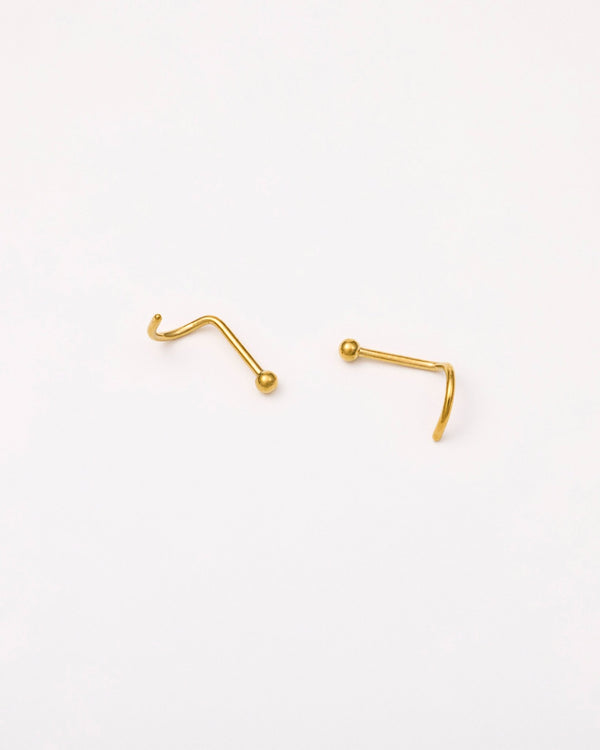
| Nose screw (corkscrew) | A post ending in a curl that rests flat inside the nostril. No back needed2 | Turn it slowly the way the curl unwinds | Curl tip first, then turn it in along the curl |
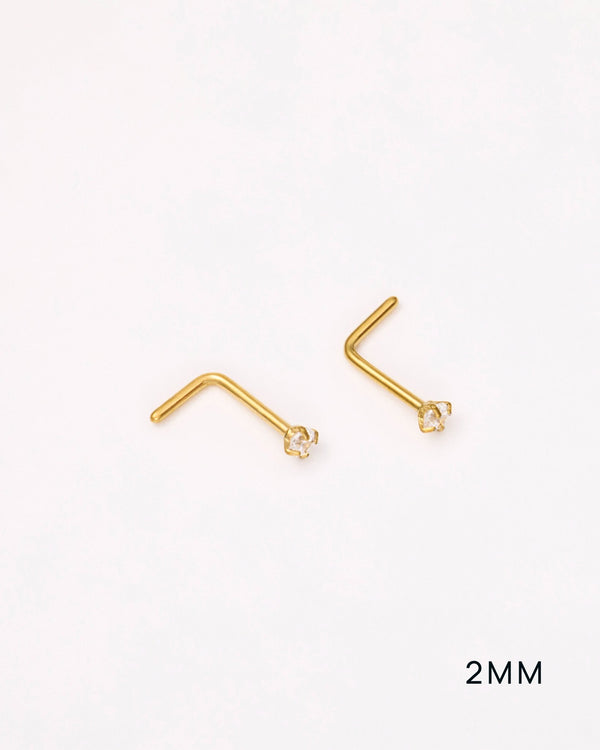
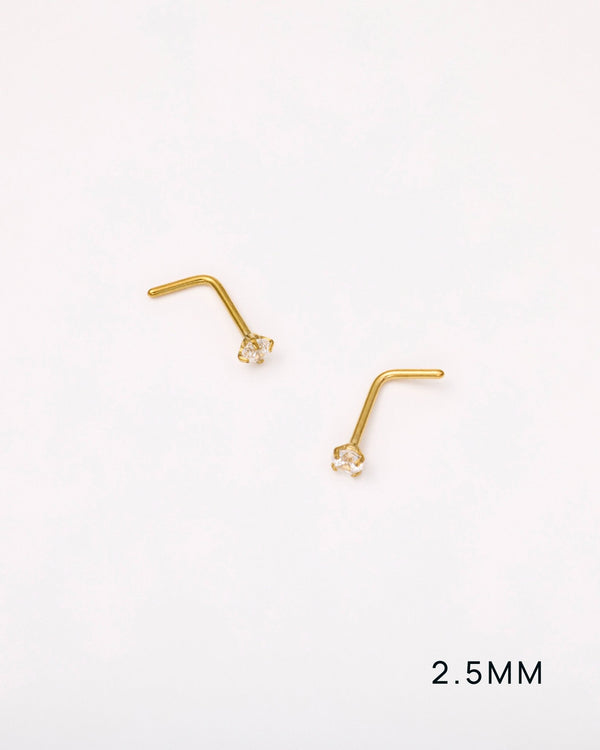
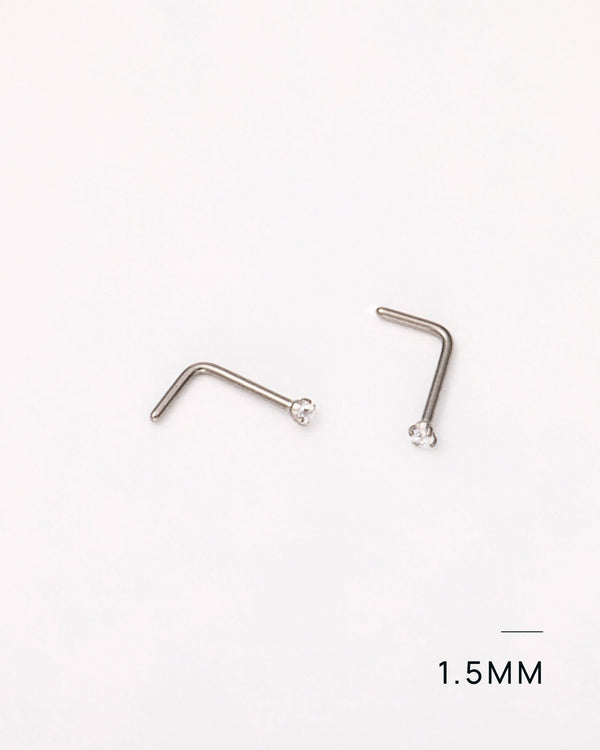
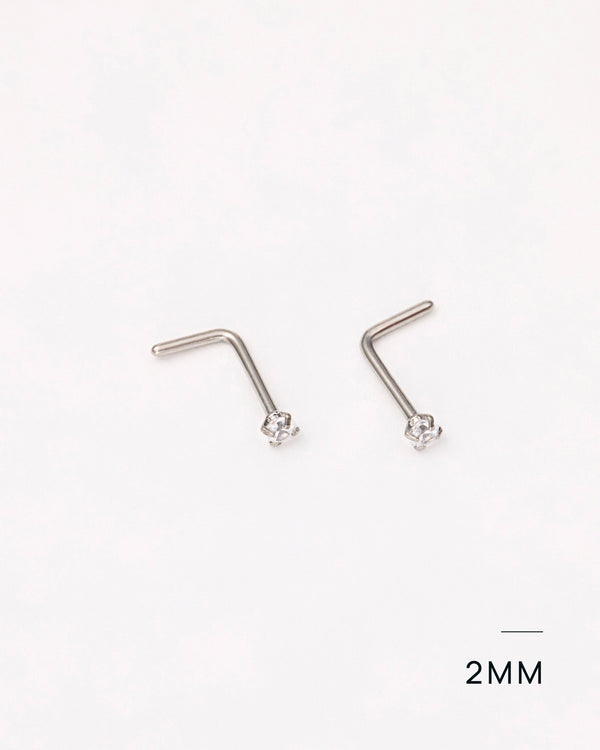
| L-shape | A screw without the curl, bending into a short foot. Easier to change, more likely to fall out2 | Pull gently, tilting so the foot follows the bend | Foot first, then bring the stud upright |
| Bone | A straight post with a small ball inside, slightly wider than the post2 | Pull gently straight out. The ball has to stretch the hole, so if it resists, see a piercer2 | Push the ball through. Only for a healed, pliable piercing2 |
| Flat back (labret) | A post with a flat disc inside,2 and a threadless (push-pin) or threaded top1 | Hold the disc. Pull a threadless top off, or unscrew a threaded one anticlockwise1 | Post in from inside, then fit the top |
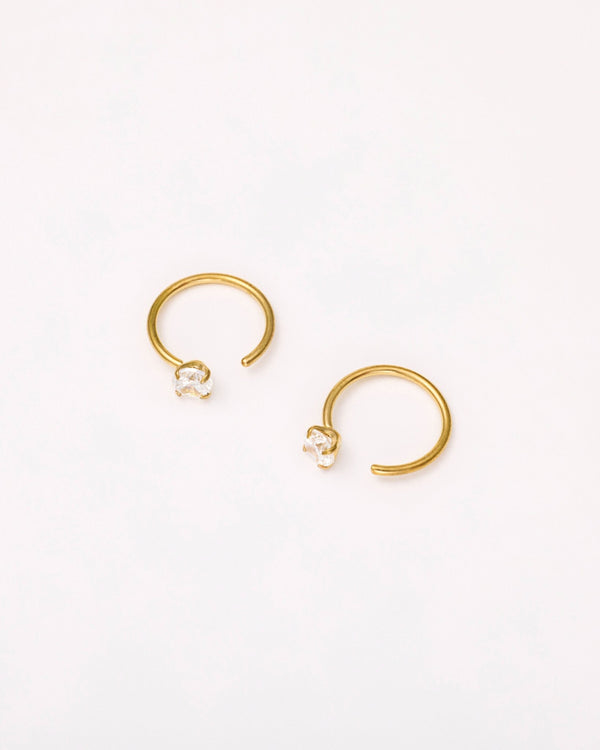
| Nose hoop | An open C-shaped or D-shaped hoop around the edge of the nostril | Rotate it back until the open end slides out1 | Open end in first, then rotate it round |
Avoid earring-style studs with a butterfly back: the pointed end aims at your septum.2 Case reports describe a nose stud's butterfly back being inhaled3 and a retainer clip pushed into the nasal cavity by an injury.4
How do you take out a nose stud?
Start with clean hands and a clean surface.1 Use a mirror in good light, and put the plug in the sink. Have the new stud ready: even a healed piercing can shrink or close in minutes once it is empty.5
How to unscrew a nose screw (corkscrew)
Despite the name, a nose screw has no thread.2 It is held in by its shape, so you wind it out.1
- Hold the topGrip the ball or stone between finger and thumb.
- Turn and ease outRotate it slowly the way the curl unwinds, drawing it outwards as you turn. If it catches, try the other way.
- Let the curl followThe tail comes out last, along the path it went in. Do not pull it straight.
How to take out an L-shaped nose stud
- Draw it outPull the top gently until you feel the bend reach the hole.
- Tilt and followTip the stud towards the way the foot points, so the short end follows the bend out. If it catches, tilt another way.
How to take out a flat back nose stud
- Hold the discSteady the flat back inside your nostril with a clean fingertip.
- Remove the topPull a threadless top straight off. A threaded top unscrews anticlockwise, and if it will not turn, it is probably push-fit.1
- Slide out the postDraw the post out from inside your nose.
How do you put a nose stud in?
Work with clean hands and clean jewellery.1 For a corkscrew nose stud:
- Find the holeUse a mirror in good light, working from outside.
- Tip firstPlace the end of the curl in the hole, angled into your nostril.
- Turn it inRotate it along the curl, easing it inwards, until the post sits straight and the curl lies flat inside.
Flat backs go in from inside the nostril, with the top fitted from outside: see our guide to inserting threadless flat back studs. Never push jewellery in. If it does not go in easily, a piercer can help.1
When can you change your nose stud?
Once it has healed, not before. The Association of Professional Piercers (APP) says it should be safe to change your jewellery when the piercing is not tender, the minimum healing time has passed, and it is no longer secreting and crusting.1 A piercing heals from the outside in, so it can look ready before it is.5
Until then, let a qualified piercer make any change.5 See how long a nose piercing takes to heal for typical timelines, and our nose stud size guide to match the gauge and post length.
What if your nose stud is stuck or the hole closes?
Stop, and do not force it.5 Forcing jewellery can tear the tissue, and some shapes need a piercer's help to remove.1
If the hole is still open and has not shrunk too much, a piercer can use an insertion taper to put jewellery back in without re-piercing, sometimes in a thinner gauge at first.1
If it is swollen, painful, hot, very red or darker than usual, leaking pus, or you feel unwell, it may be infected. The NHS advises leaving the jewellery in unless a doctor tells you to take it out, and getting an urgent GP appointment or help from NHS 111.6 Removing it can lead to an abscess.7

For healed piercings
Nose studs in implant-grade titanium
L-shape and screw studs with 7mm posts, and C-shape and D-shape hoops, all 0.8mm (20 gauge). Made from ASTM F136 titanium, one of the materials the APP lists for body jewellery,8 in 18K gold PVD or polished, unplated silver tone.
Shop nose studsNose stud FAQs
How do you unscrew a nose stud?
It depends on the type. A nose screw has no thread, so turn it slowly in the direction of its curl and ease it out as it unwinds. A flat back with a threaded top unscrews anticlockwise while you hold the disc inside your nostril. If a top will not turn, it is probably push-fit and pulls straight off.
How do you take out a flat back nose stud?
Hold the flat disc inside your nostril with a clean fingertip, then remove the top from outside. A threadless top pulls straight off, and a threaded one unscrews anticlockwise. Once the top is off, slide the post and disc out from inside your nose. If it will not come apart, a piercer can help.
When can I change my nose stud?
Once the piercing has healed. The Association of Professional Piercers says it should be safe when the piercing is not tender, the minimum healing time has passed, and it is no longer secreting or crusting. Before that, ask a qualified piercer to make any jewellery change, because a piercing can look healed before it is.
How do you put in a corkscrew nose stud?
With clean hands, place the tip of the curl into the hole from the outside. Turn the stud slowly in the direction of the curl, easing it in, until the post sits straight and the curl lies flat inside your nostril. If it will not go in easily, do not force it: a piercer can help.
What is an L-shaped nose stud?
An L-shaped nose stud has a straight post that bends into a short foot inside the nostril, like a nose screw without the curl. It is easier to put in than a screw, which suits frequent changes, but it is also more likely to fall out.
What are the types of nose studs?
The main types are the nose screw (or corkscrew), the L-shape, the nose bone and the flat back labret, which has a threadless or threaded top. Nose hoops are an alternative to a stud. Each is held in differently, so each one comes out differently.
Sources
- Association of Professional Piercers. Jewelry for Healed Piercings (brochure). safepiercing.org
- Angel E. Nostril piercing placement, with excerpts from The Piercing Bible: The Definitive Guide to Safe Body Piercing. Elayne Angel's Piercing Bible, 2013. piercingbible.com
- Yung B, Norton C, Davies BH. A bronchial butterfly. European Respiratory Journal, 1994;7(1):202-203. PubMed
- Morris AJ, Jennings CN. A nose stud retainer clip lost within the nasal cavity discovered on dental radiographs. Dental Update, 1994;21(2):70,72. PubMed
- Association of Professional Piercers. Suggested Aftercare for Body Piercings (brochure). safepiercing.org
- NHS. Infected piercings (page last reviewed 18 April 2023). NHS website
- Association of Professional Piercers. Body Piercing Troubleshooting for You and Your Healthcare Professional (brochure). safepiercing.org
- Association of Professional Piercers. Jewelry for Initial Piercings (brochure). safepiercing.org