Hypoallergenic Earrings: What the Label Actually Means

Doctor-led note: this guide is informational and does not replace medical advice. If earrings cause swelling, spreading redness, discharge or worsening pain, stop wearing them and seek advice from a clinician or experienced piercer.
What does hypoallergenic mean for earrings?
Hypoallergenic means “less likely to cause allergy”. It does not always mean nickel-free, implant-grade, or safe for every sensitive ear. Two products can both be sold as hypoallergenic while using very different metals underneath.
The label is a starting point, not proof
The important question is not only whether an earring says hypoallergenic. It is what the post, back, hoop and any coating are made from, because those parts sit directly against the skin.
Why nickel is the main issue
Nickel is one of the most common triggers for allergic contact dermatitis. With earrings, the risk is higher because the metal sits through or against the skin for long periods. A reaction can look like itching, redness, soreness, dryness, swelling or weeping around the piercing.
That does not mean every sore piercing is an allergy. Pressure, poor fit, infection, over-cleaning and fresh piercing trauma can all irritate ears too. But if the same ear reacts whenever you wear certain jewellery, metal sensitivity should be high on the list.
Best earring materials for sensitive ears
| Material | Good for sensitive ears? | What to know |
|---|---|---|
| Implant-grade titanium | Yes, best first choice | Lightweight, nickel-safe and used for body jewellery. Best for everyday earrings and flat backs. |
| Solid nickel-free gold | Often, if certified | Can work well, but alloy details matter. Avoid unclear gold-tone plating over mystery metal. |
| Surgical steel | Not ideal for reactive ears | Often contains nickel. Some people tolerate it, but it is not my first choice for sensitive ears. |
| Sterling silver | Better for short wear | Can tarnish and may not be ideal inside piercings or for all-day wear. |
| Plated brass or mixed alloy | Avoid if you react | Once plating wears, the base metal can touch skin and trigger irritation. |
What to avoid if earrings irritate your ears
Unclear metal descriptions
Descriptions like “fashion alloy”, “gold colour”, “silver tone” or “hypoallergenic finish” do not tell you what is touching your skin.
Thin plating over base metal
Plating can look beautiful at first but wear down over time. For sensitive ears, every layer should be skin-safe, not just the top coat.
Titanium for daily wear
For earrings you wear all day, sleep in, shower in or leave in cartilage piercings, titanium is a stronger default than plated fashion jewellery.
What rhokea recommends
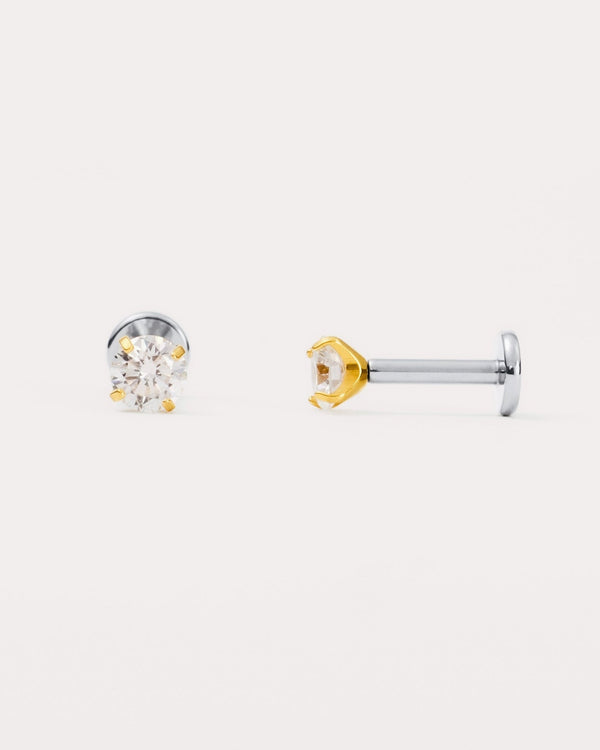
Start with hypoallergenic earrings made from implant-grade titanium. If your ears are very reactive, choose flat back studs first because the smooth disc sits flush and reduces pressure behind the ear.
You can also shop by intent: titanium earrings for everyday wear, sensitive ears earrings for reactive ears, and nickel free earrings if nickel is your known trigger.
Frequently asked questions
Are hypoallergenic earrings always nickel-free?
No. Hypoallergenic means less likely to cause allergy, but it does not always prove the earring is nickel-free. Check the exact metal, especially the post and back.
What is the best metal for hypoallergenic earrings?
Implant-grade titanium is one of the best choices for sensitive ears because it is lightweight, nickel-safe and suitable for body jewellery.
Can surgical steel earrings be hypoallergenic?
Some people tolerate surgical steel, but it often contains nickel. If your ears react easily, titanium is usually the safer first choice.
Are gold-plated earrings good for sensitive ears?
Only if every layer is skin-safe. Thin gold plating over a base metal can wear away and expose metal that irritates sensitive ears.
What earrings should I choose if my ears itch?
Stop wearing the earrings that trigger itching, let the skin settle, and choose implant-grade titanium or certified nickel-free jewellery for your next pair.
References
- Association of Professional Piercers. Jewellery for initial piercings.
- NHS. Contact dermatitis causes.
- Spreckelsen RA, Symmank D, Adam J, et al. Worldwide prevalence of nickel sensitisation: systematic review and meta-analysis. Contact Dermatitis, 2025. PubMed.