Does a Helix Piercing Hurt? A Doctor's Guide to Pain and Healing

Piercing Guides · Reviewed by a doctor
If you are weighing up a helix piercing, the first question is usually the most honest one: will it hurt? Here is a calm, evidence-led answer on what to expect, how long the soreness lasts, and how to keep discomfort to a minimum.
Yes, a helix piercing is felt more than an earlobe piercing because the needle passes through firm cartilage rather than soft tissue.1 Most people report a brief, sharp pinch and pressure lasting a few seconds, then a dull warmth. Pain is subjective, and the area can feel tender on and off for several months as cartilage heals.1
Key takeaways
- The sharp pain happens in seconds during the piercing, then eases to a dull ache.
- Cartilage is firmer and has a poor blood supply, so it heals slower than the lobe and stays tender longer.1
- Worsening pain after the first week, with spreading redness or discharge, can signal infection and needs prompt care.4
- Gentle saline aftercare and low-reactivity jewellery help keep discomfort down.5
How much does a helix piercing hurt?
A helix piercing is noticeable but brief. It sits in the middle of the ear-piercing pain range: sharper than the soft earlobe, yet generally milder than deeper cartilage placements such as the rook or daith. The intense part is the moment the needle passes through, which most people describe as a quick, hot pinch with firm pressure, lasting only seconds before it settles into a dull throb.
Pain is personal. The same piercing can feel different from one person to the next, shaped by anxiety, tiredness and the exact spot within the cartilage. So while we can describe what is typical, your own experience may be milder or stronger, and both are normal.
Why cartilage feels different from the lobe
The difference comes down to tissue. The earlobe is soft and fleshy, so a needle moves through it easily. The helix runs through the firmer, denser cartilage of the upper ear, which offers more resistance and a sharper sensation.
Cartilage also behaves differently once pierced. The cartilage of the outer ear has a scanty blood supply, which makes it both slower to heal and more susceptible to infection than soft tissue.1 That limited blood flow is the main reason a helix can stay sensitive for far longer than a lobe piercing, and why careful aftercare matters more here.
What the pain feels like, step by step
Most helix piercings follow a predictable arc, from a brief sharp moment to a gradual calming over the weeks that follow.
Normal soreness or a warning sign?
Some discomfort is part of healing, but pain that climbs rather than fades is worth attention. A new piercing may be tender and a little red or darker around the site in the first days, and small fluid-filled lumps can sometimes form around cartilage piercings.4 The table below helps you tell ordinary healing from a problem.
| Usually normal | Check with a clinician |
|---|---|
| Brief sharp pain during the piercing | Pain that worsens after the first few days |
| Mild throb and warmth for a few days | Spreading redness, heat or significant swelling |
| Light tenderness when knocked | Pus, discharge or a bad smell |
| Slight swelling that eases | Fever or feeling generally unwell |
High cartilage piercings carry a greater risk of infection and abscess than lobe piercings, and an inflamed cartilage infection known as perichondritis is both painful and can progress quickly if neglected.1 If your symptoms match the right-hand column, do not remove the jewellery yourself, and seek medical advice promptly.4
How long the soreness lasts
Expect tenderness to come and go for months rather than days. Cartilage heals slowly precisely because of its poor blood supply, so even when the surface looks calm, the tissue beneath is still knitting together.1 A short period of swelling and sensitivity in the first weeks is normal, with intermittent tenderness easing over the following months. For a full month-by-month picture, see our helix piercing healing time guide.
How to keep helix pain to a minimum
Good aftercare is the single biggest lever you have over comfort. Gentle, consistent care keeps irritation and swelling down, which keeps pain down too.
Choosing the right starting jewellery helps as well. Lightweight pieces in a smooth, low-reactivity metal reduce the tugging and irritation that make a fresh helix ache.
Does jewellery material affect comfort?
Yes, what sits in the piercing can ease or aggravate it. Allergic reaction is one of the more common complications of ear piercing, and nickel is a frequent trigger of contact irritation that can leave a piercing itchy, red and sore.4 For sensitive skin, a low-reactivity metal removes one avoidable source of discomfort while the cartilage heals.
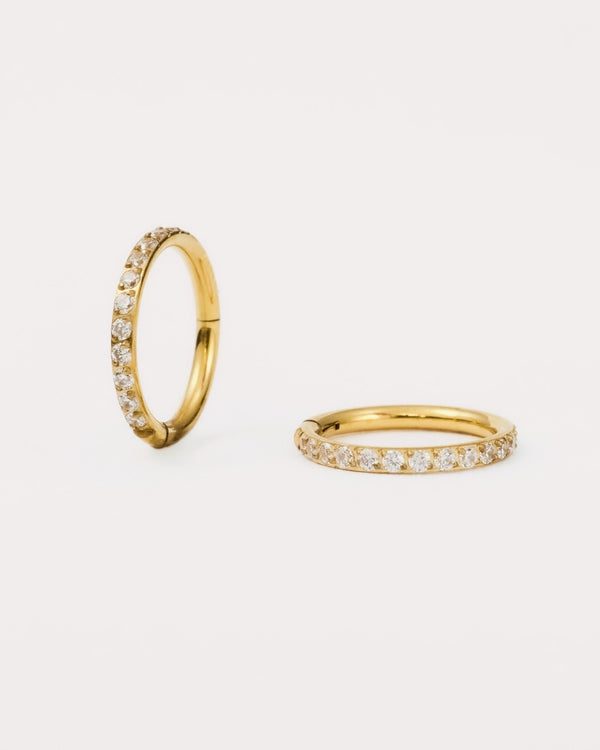
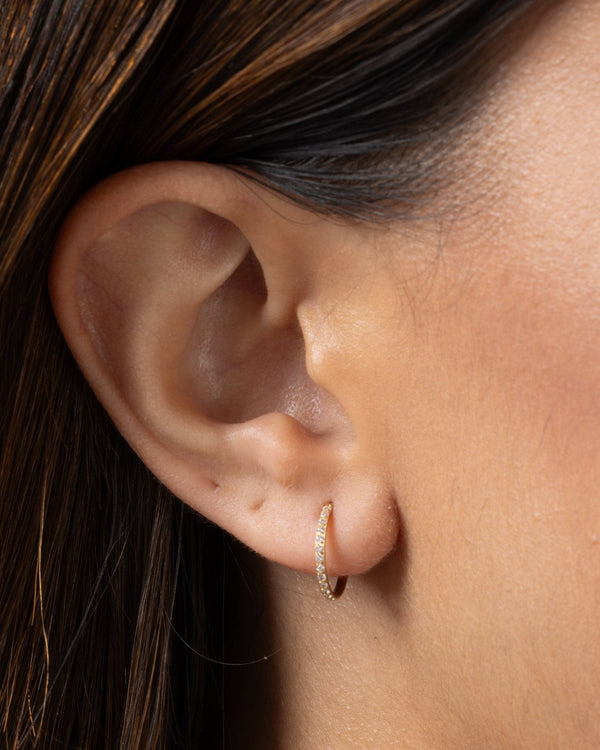
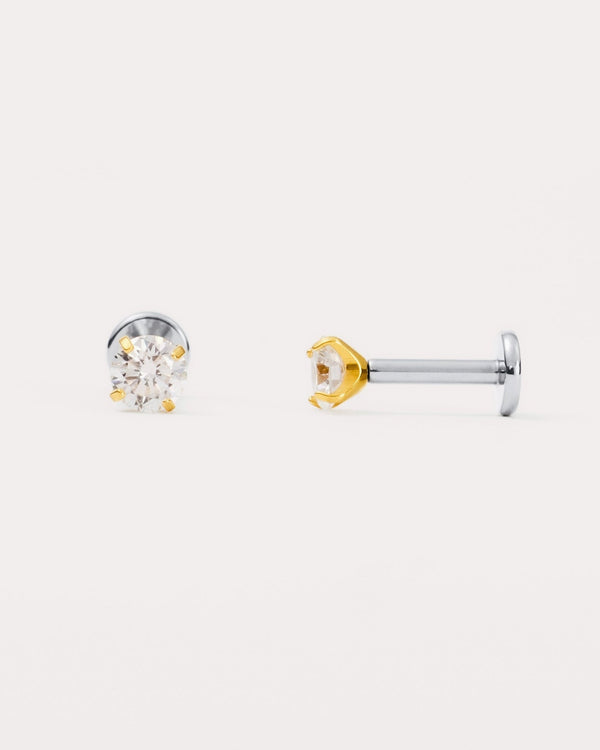
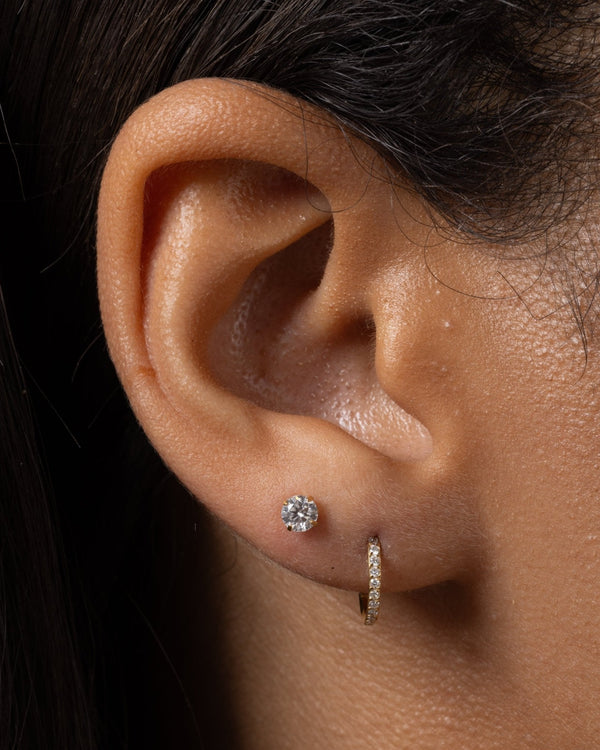
This is why we make our helix jewellery from implant-grade titanium. It is the same family of metal trusted in medical implants, and it is light, smooth and gentle against healing skin. Explore the wider titanium earrings range, or browse flat back studs whose flat disc backing sits comfortably against the ear during sleep.
The material difference
Rhokea jewellery is made from implant-grade titanium (ASTM F136). Independent testing by Intertek found nickel release below the EU REACH limit of 0.2 micrograms per square centimetre per week, so there is less for reactive skin to respond to while your piercing settles.6
Shop helix jewellery →Frequently asked questions
Does a helix piercing hurt?
Yes, it is felt more than an earlobe piercing because the needle passes through firm cartilage rather than soft tissue. Most people describe a brief, sharp pinch and pressure lasting a few seconds, followed by a dull warmth. Pain is subjective and varies between people.
Where does a helix piercing sit on the pain scale?
In the middle of the ear-piercing range. It is sharper than a lobe but generally milder than deeper cartilage placements such as the rook or daith, and the sensation during the piercing itself is short-lived.
Why does cartilage hurt more than the earlobe?
Ear cartilage is firmer and denser than the fleshy lobe, so the needle meets more resistance. Cartilage also has a poor blood supply, so it tends to stay tender longer and heals more slowly than soft tissue.
How long does a helix piercing stay sore?
Mild soreness, swelling and warmth for a few days to a couple of weeks is normal. Because cartilage heals slowly, the area can feel tender on and off for several months while it fully settles.
Is throbbing after a helix piercing normal?
A gentle throb and tenderness in the first days is expected. Pain that worsens after the first week, with spreading redness, heat, swelling or discharge, can signal infection and should be checked by a clinician promptly.
How can I reduce helix piercing pain while it heals?
Clean it once or twice a day with sterile saline, avoid twisting or playing with the jewellery, and try not to sleep on that side. Pressure from sleeping is a common cause of irritation and prolonged swelling.
Does the jewellery material affect comfort?
Yes. Nickel is a common trigger of contact irritation. Implant-grade titanium is a low-reactivity choice, and independent Intertek testing of Rhokea jewellery found nickel release below the EU REACH limit.
Does sleeping on a new helix piercing make it hurt more?
Yes. Direct pressure on a healing cartilage piercing is one of the most common causes of irritation bumps, prolonged swelling and tenderness. A travel pillow or sleeping on the opposite side can help.
When should I see a doctor about helix piercing pain?
Seek prompt advice if pain increases after the first few days, or if you notice spreading redness, heat, significant swelling, pus or fever. Cartilage infections can progress quickly and need timely treatment.
Is a helix piercing more painful for some people?
Yes. Pain perception differs between individuals, so the same piercing can feel different from one person to the next. Anxiety, tiredness and the exact placement within the cartilage can all influence how sharp it feels.
Sources
- Khan N, Saleh HM, Hohman MH, Cunning N. Pinna Perichondritis. StatPearls, updated May 2024. ncbi.nlm.nih.gov/books/NBK572081
- Sosin M, Weissler JM, Pulcrano M, Rodriguez ED. Transcartilaginous ear piercing and infectious complications: a systematic review and critical analysis of outcomes. Laryngoscope, 2015. pubmed.ncbi.nlm.nih.gov/25825232
- Hanif J, Frosh A, Marnane C, Ghufoor K, Rivron R, Sandhu G. "High" ear piercing and the rising incidence of perichondritis of the pinna. BMJ, 2001. ncbi.nlm.nih.gov/pmc/articles/PMC1120071
- NHS. Infected piercings. nhs.uk/conditions/infected-piercings
- Association of Professional Piercers. Suggested Aftercare for Body Piercings. safepiercing.org/aftercare
- Intertek nickel release test report for Rhokea jewellery. View report (PDF)