Is Stainless Steel Hypoallergenic? A Doctor on Nickel and Steel

Stainless steel is often sold as hypoallergenic, and many people wear it without a problem. But widely used grades such as 316L contain nickel, the most common contact allergen. Here is what the evidence says about who tolerates steel, who reacts, and what to wear if your skin is sensitive.
The short answer
Not reliably. Many stainless steels contain nickel: 316L is about 10-14%. A thin chromium oxide film holds most of it in, so many people, including many with a nickel allergy, tolerate good-quality plain steel. Electroplated or high-sulphur steel is more likely to cause trouble. With a nickel allergy, past reactions to steel or a new piercing, implant-grade titanium is the more cautious choice.
- 10-14%Nickel in 316L stainless steel, held in by a thin chromium oxide film.
- 11.4%Share of the general population with nickel allergy on patch testing.
- 0.2 µg/cm²The UK weekly limit on nickel release from piercing posts.
Does stainless steel contain nickel?
Stainless steel is a family of alloys. What makes it stainless is chromium, at least 10.5%, which forms a chromium oxide film about 1-3 nanometres thick in air. That film protects the steel from corrosion and limits how much metal it releases.1
Many grades also contain nickel. 316L is roughly 65% iron, 16-18% chromium and 10-14% nickel.1 For your skin, though, what counts is how much nickel dissolves from the surface, not simply how much is in the metal.2
UK law takes the same approach. It limits nickel release to under 0.2 µg/cm² per week for posts that pass through a piercing, and to no more than 0.5 for other jewellery in prolonged contact with skin.3
Is stainless steel good for jewellery?
For many people, yes. Its oxide film makes it resistant to corrosion,1 and copper, a well-known cause of green marks on skin,4 is not one of the main ingredients of 316L. Our guide to whether stainless steel jewellery tarnishes covers sweat, pools and the sea.
The allergy evidence is reassuring for plain steel. When 100 nickel-sensitive people were patch tested with a broad range of nickel-containing alloys, three non-plated stainless steels caused no reactions.5 In another study, low-sulphur steels including 316L released under 0.03 µg/cm² of nickel a week in acidic artificial sweat, and caused no reactions in nickel-allergic patients.2 More recently, bare 316L released no measurable nickel in lab tests.1
Why do some people react to stainless steel?
Nickel is the most common contact allergen: across 28 studies of the general population, 11.4% of people tested positive to it.6 For them, how a steel is made and worn matters. The main risks are:
- High-sulphur grades. 303 steel released about 1.5 µg/cm² of nickel a week, and 14% of nickel-allergic patients reacted to it.2
- Electroplating. Electroplating steel means stripping its chromium oxide layer first. 316L with a thin electroplated gold layer, about 0.25 to 0.3 microns, released nickel above the legal limit in several lab tests, and unpolished samples released more than polished ones. A 1 micron gold layer kept release under the limit, and gold applied by physical vapour deposition (PVD), which leaves the chromium oxide layer in place, released no measurable nickel.1
- Piercings. A fresh piercing exposes steel to body fluid as well as sweat, and nickel release from steel in blood plasma has been measured at almost double that in artificial sweat. A 2025 review adds that stainless steel piercing kits can cause allergic nickel dermatitis.7
Is surgical steel hypoallergenic?
Not as a rule. "Surgical steel" sounds precise, but the Association of Professional Piercers (APP) notes that it covers a variety of alloys, and that only a few specific grades are proven biocompatible, such as steel meeting ASTM F138.8
Even that implant standard is named for its make-up: 18% chromium, 14% nickel and 2.5% molybdenum.9 So the name tells you less than it seems. Ask for the grade and a nickel release test result, and see our comparison of titanium vs surgical steel earrings for the everyday differences.
| Metal | Nickel | New piercings (APP) | Worth knowing |
|---|---|---|---|
| 316L stainless steel | 10-14%1 | Only if it meets a standard the APP lists8 | In patch tests, plain low-sulphur 316L caused no reactions in nickel-allergic patients2 |
| Implant-grade steel (ASTM F138) | About 14%9 | Listed8 | Specified for surgical implants, but still contains nickel |
| F136 titanium (rhokea) | Not an alloying element10 | Listed8 | Specified for surgical implants: titanium with about 6% aluminium and 4% vanadium11 |
| Sterling silver | None in the classic alloy of 92.5% silver and 7.5% copper12 | Not listed8 | In fresh piercings, silver can leave blue-grey staining in the skin13 |
Who should choose titanium instead?
Steel suits many people. We would suggest implant-grade titanium if:
- You know you have a nickel allergy.
- Steel has made your skin itchy, red or flaky before. Our guide to nickel allergy symptoms from earrings explains the signs.
- You are having a new piercing. Piercing is strongly linked with nickel allergy in general-population studies,7 and the APP describes titanium as ideal for people with concerns about nickel sensitivity.8 Your piercer chooses the first jewellery, so ask them about titanium; our own pieces are for healed piercings.
ASTM F136 titanium is Ti-6Al-4V ELI,11 and nickel is not one of its alloying elements.10 If you are comparing labels, our guide to nickel-free vs hypoallergenic earrings explains what each one promises.

The rhokea alternative
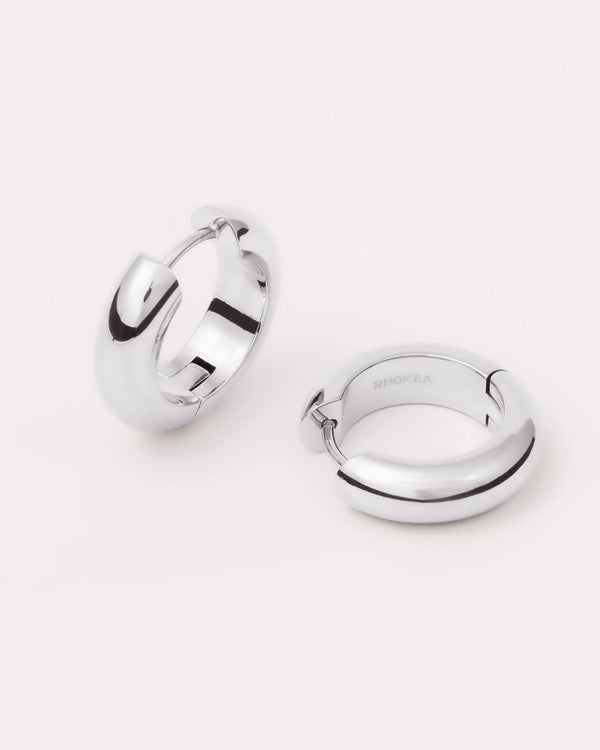
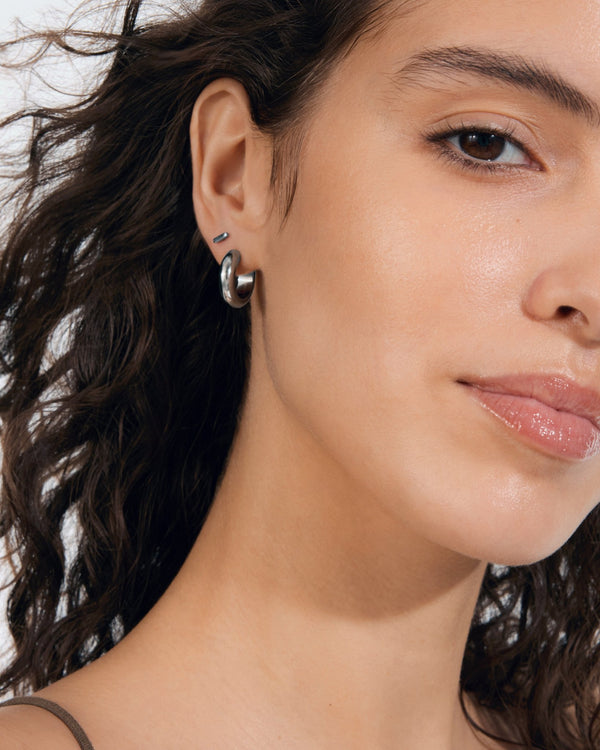
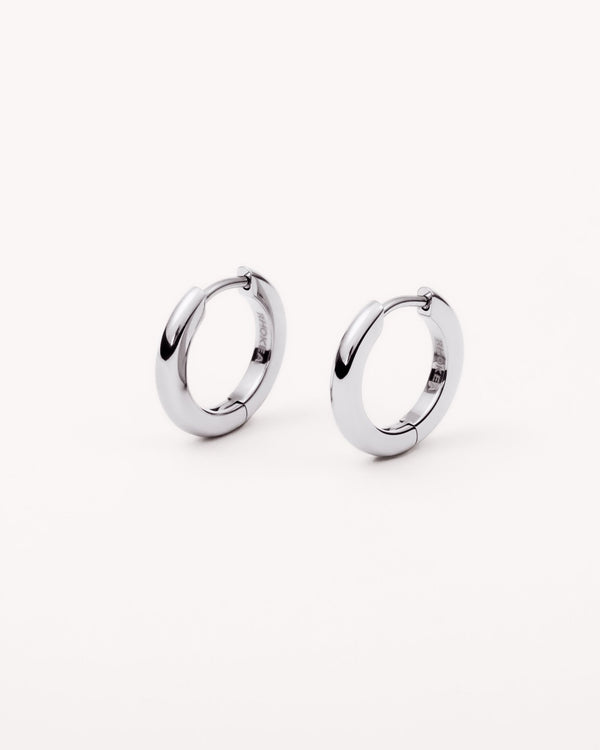
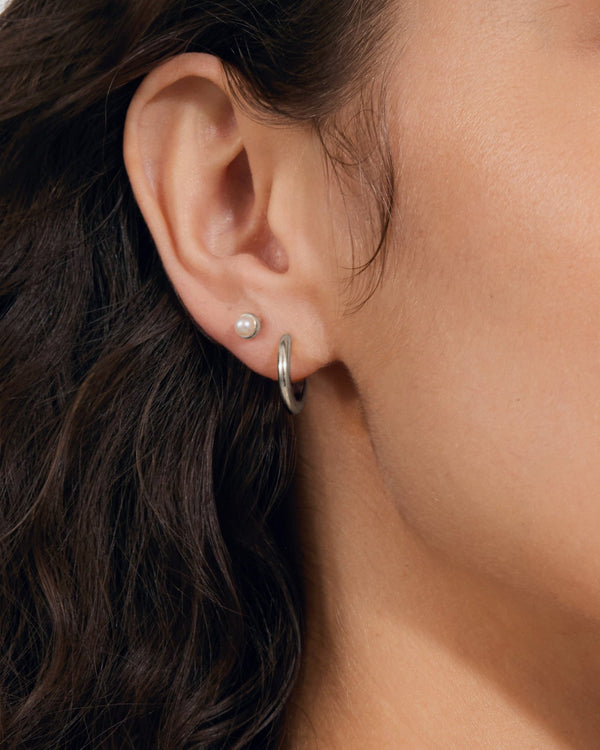
Silver-tone earrings on implant-grade titanium
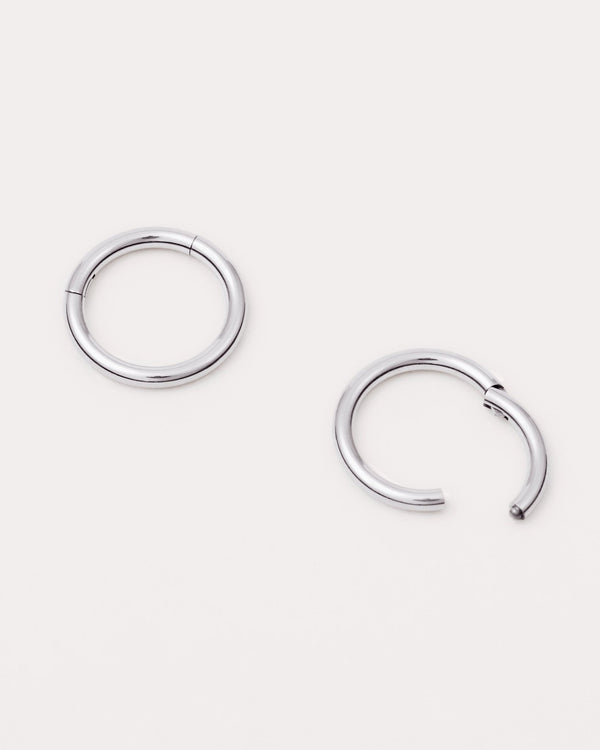
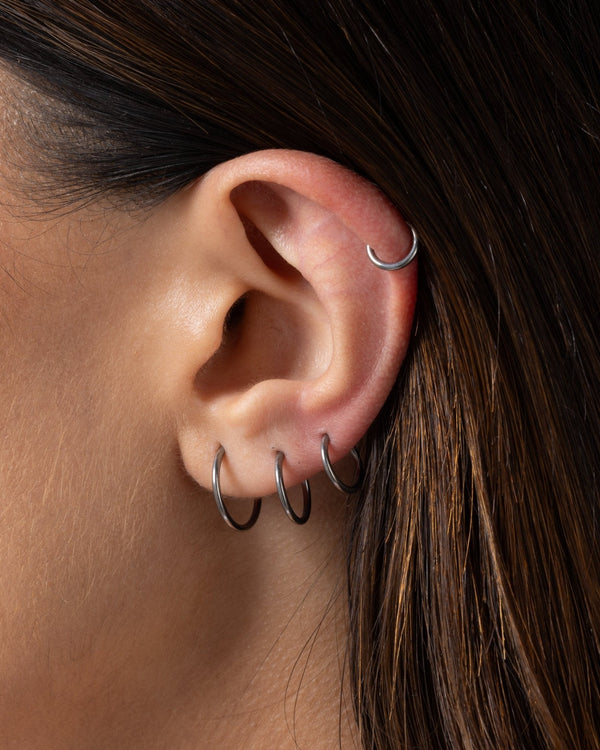
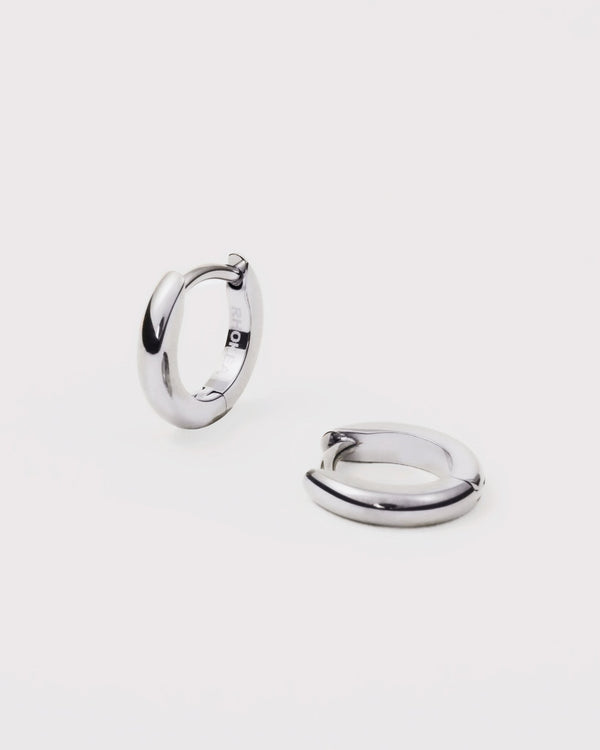
Our silver-tone earrings and huggies are finished in pure platinum over a chromium nitride ceramic layer on ASTM F136 titanium, and our silver piercing hoops are polished, unplated F136 titanium. Intertek testing of our jewellery measured nickel release below 0.1 µg/cm² per week, under half the 0.2 limit.10
Shop hypoallergenic earringsStainless steel FAQs
Is stainless steel hypoallergenic?
Not reliably. Many stainless steels contain nickel, and 316L is about 10-14% nickel. Its chromium oxide film keeps release low, so many people, including many with a nickel allergy, tolerate good-quality plain steel. Electroplated or high-sulphur steel is more likely to cause reactions. Hypoallergenic means less likely to cause allergy, not never.
Is surgical steel hypoallergenic?
Not necessarily. Surgical steel covers a variety of alloys, and only a few grades, such as steel meeting ASTM F138, are proven biocompatible for body jewellery. Even F138 is about 14% nickel. Many people tolerate it, but if you have a nickel allergy, implant-grade titanium is the more cautious choice.
Is stainless steel good for jewellery?
For many people, yes. It resists corrosion, and in studies, plain low-sulphur steel released very little nickel and, in patch tests, caused no reactions in nickel-allergic patients. It is less suitable if you have a nickel allergy, have reacted to steel before, or are choosing jewellery for a new piercing. In those cases, implant-grade titanium is the more cautious option.
Does stainless steel jewellery turn green?
It is unlikely. Copper is a well-known cause of green marks on skin, and it is not one of the main ingredients of 316L stainless steel, which is mostly iron, chromium and nickel. If a steel piece does leave a green mark, check whether it is plated or made from a different alloy.
Can you shower with stainless steel jewellery?
Generally, yes. Good-quality stainless steel resists corrosion because its chromium oxide film forms in air and protects the surface, so everyday water is unlikely to harm it. Plated steel is different, because plating is a thin surface layer that can wear. If steel irritates your skin, water will not change that.
Can you wear stainless steel with a nickel allergy?
Some people can. In patch test studies, plain low-sulphur stainless steel caused no reactions in nickel-allergic patients. But reactions are more likely with electroplated or high-sulphur steel, and in piercings. If steel has irritated your skin before, choose implant-grade titanium, and speak to a pharmacist or GP if a rash does not settle.
Sources
- Emanuele R, Comparini A, Verrucchi M, et al. Nickel release from 316L stainless steel following a Ni-free electroplating cycle. Heliyon, 2024;10(17):e37125. PubMed
- Haudrechy P, Foussereau J, Mantout B, Baroux B. Nickel release from nickel-plated metals and stainless steels. Contact Dermatitis, 1994;31(4):249-255. PubMed
- Business Companion (Chartered Trading Standards Institute). Jewellery safety: metal content. Business Companion
- Peterson J, Shook BA, Wells MJ, Rodriguez M. Cupric keratosis: green seborrheic keratoses secondary to external copper exposure. Cutis, 2006;77(1):39-41. PubMed
- Lidén C, Menné T, Burrows D. Nickel-containing alloys and platings and their ability to cause dermatitis. British Journal of Dermatology, 1996;134(2):193-198. PubMed
- Alinaghi F, Bennike NH, Egeberg A, Thyssen JP, Johansen JD. Prevalence of contact allergy in the general population: a systematic review and meta-analysis. Contact Dermatitis, 2019;80(2):77-85. PubMed
- von Spreckelsen B, Jensen MB, Johansen JD, Ahlström MG. Nickel allergy and piercings: a systematic review and meta-analysis. Contact Dermatitis, 2025;93(4):275-284. PubMed
- Association of Professional Piercers. Jewelry for initial piercings. APP
- ASTM International. ASTM F138, Standard specification for wrought 18chromium-14nickel-2.5molybdenum stainless steel bar and wire for surgical implants (UNS S31673). ASTM
- rhokea. Material testing certificate summarising Intertek reports TSNH00571888 and TSNH00571900, December 2025. PDF
- ASTM International. ASTM F136-26: Standard specification for wrought titanium-6aluminum-4vanadium ELI (extra low interstitial) alloy for surgical implant applications (UNS R56401), 2026. ASTM
- Canadian Conservation Institute. Understanding how silver objects tarnish. Government of Canada
- Madan V. Tarnish tattoos: localized cutaneous argyria from sterling silver in fresh piercings. A case series. Clinical and Experimental Dermatology, 2025;50(3):639-641. PubMed