Jewellery That Doesn't Tarnish: A Doctor's Guide

You bought a necklace you loved. Two months later it turned dark, left green marks on your skin, and ended up in a drawer. Tarnishing is the most common reason people stop wearing their favourite jewellery. But it is not inevitable. It depends entirely on the metal.
Most fashion jewellery tarnishes because thin plating wears off, exposing reactive base metals underneath. Sterling silver tarnishes naturally. Stainless steel releases nickel. Titanium does none of these things. It is corrosion-resistant, waterproof, and nickel-free.
Why jewellery tarnishes
Tarnishing is a chemical reaction between metal and moisture, air, sweat, or chemicals. Most fashion jewellery is made from a reactive base metal like brass or copper, coated with a thin layer of gold, rhodium, or platinum. That coating is typically only 0.5 to 2.5 microns thick. Once everyday wear breaks through it, the reactive base metal is exposed, and tarnishing, discolouration, and skin reactions begin.
The most common fashion jewellery metals, compared
At a glance
| Metal | Tarnishes | Waterproof | Nickel-free | Skin staining |
|---|---|---|---|---|
| Gold-plated | Yes | No | Usually not | Green marks |
| Sterling silver | Yes | No | Usually yes | Grey marks |
| Stainless steel | Can do | Mostly | No (8-14% Ni) | Possible |
| Solid gold (18k) | No | Yes | Not always | Possible |
| Titanium | No | Yes | Yes | None |
What to look for when buying tarnish-free jewellery
Check the base metal, not the finish
Every surface finish wears gradually with daily contact, and friction. When the plating thins or wears through, the base metal is what sits against your skin. If that base metal is brass or copper, you get tarnishing, green marks, and reactions. But even while the plating is still intact, reactive base metals can cause problems. Moisture works through micro-pores in the coating, reaching the metal underneath and triggering oxidation from within. That is why gold-plated pieces sometimes discolour unevenly before the plating visibly wears away.
Look for a specific grade
"Premium metal" and "high-quality stainless steel" are marketing language. Trustworthy brands state the exact grade. For titanium, look for ASTM F136 or ASTM F67 (implant-grade). For stainless steel, 316L. If a brand does not tell you the grade, there is usually a reason.
Ask whether it is waterproof
Only a few jewellery metals are genuinely waterproof: high-karat gold (18k and above), platinum, stainless steel, and titanium. If a brand tells you to remove a piece before showering or swimming, the metal or coating is reactive and will degrade with moisture exposure. Waterproof metals do not come with those warnings.
Know what gold you are actually getting
As above, 18k is an alloy, not pure gold. If a brand uses gold in its finish, check the purity, not just the colour. 24k is actual pure gold, free of alloyed metals. That matters both for skin safety and for what happens as the piece ages.
How rhokea handles this
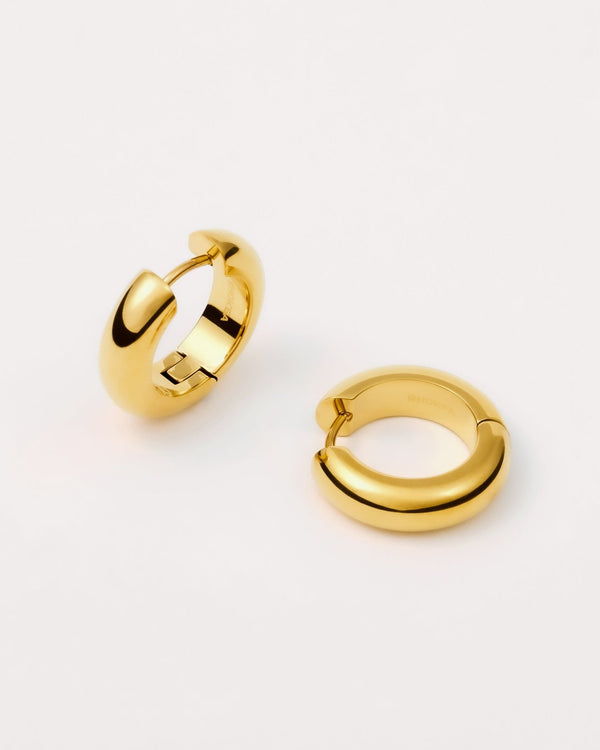
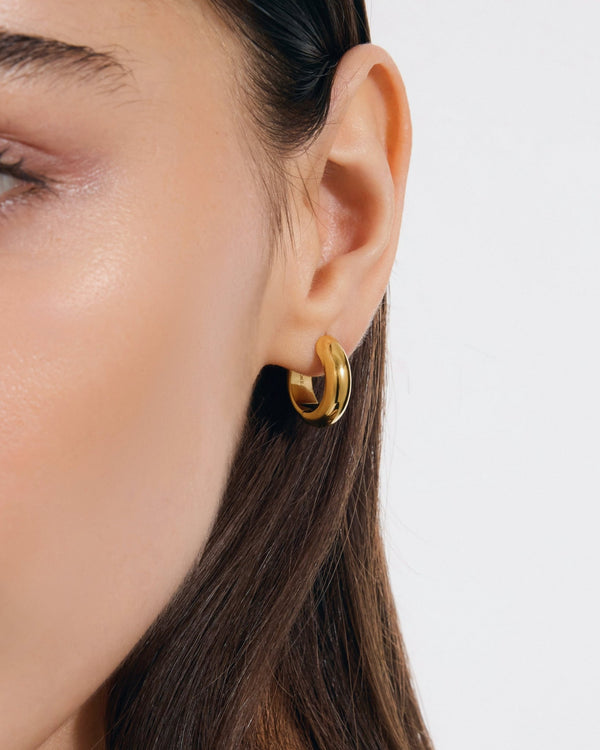
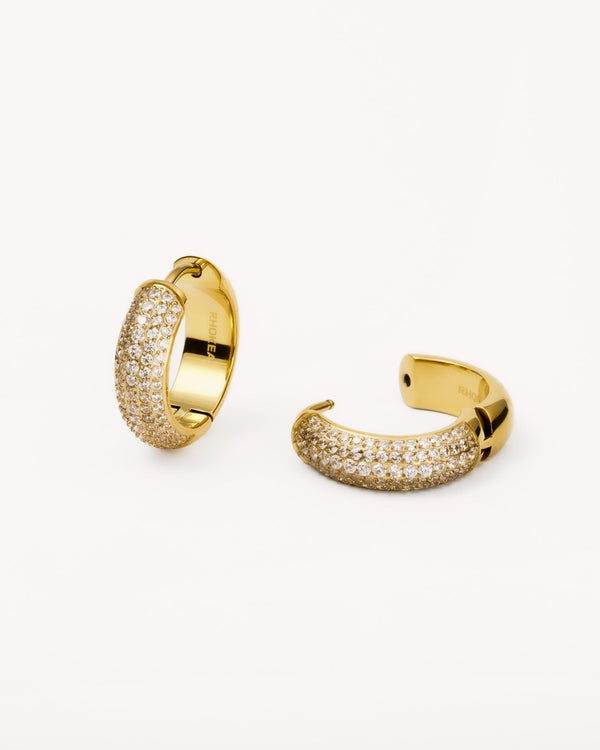
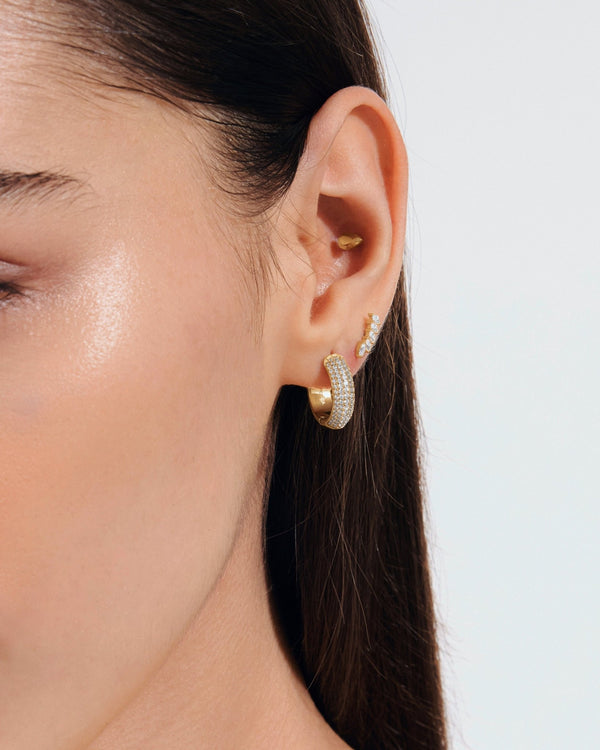
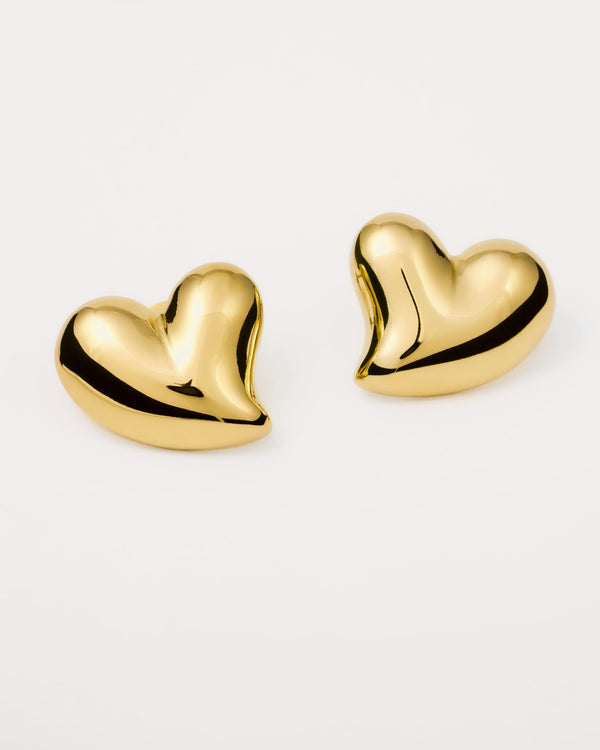
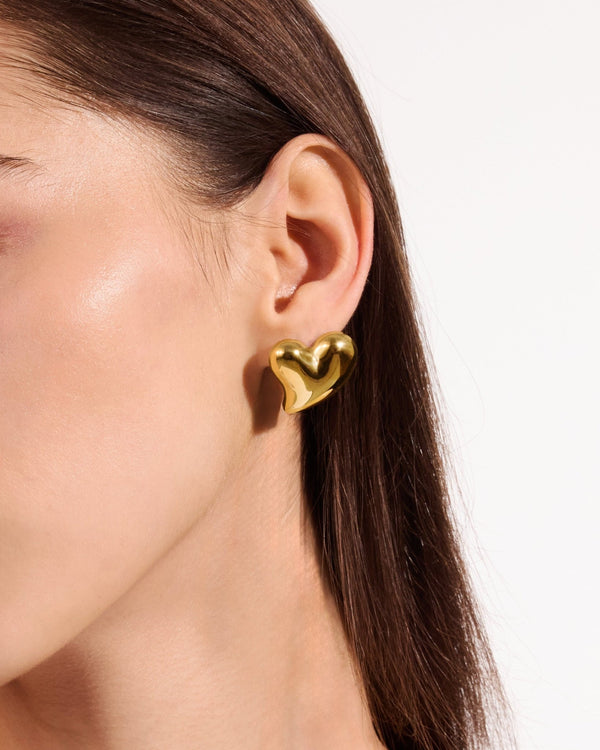
rhokea jewellery won't tarnish like silver. Every piece is crafted from implant-grade titanium and finished with SkinPlating™, a durable ceramic barrier layer topped with pure 24K gold or platinum. All three layers - the titanium base, the ceramic barrier, and the pure metal finish - are individually skin-safe and resistant to tarnishing. Because there are no reactive metals anywhere in the stack, rhokea jewellery won't behave like traditional metals that discolour over time.

rhokea jewellery is built for everyday wear. If you wear it daily, tiny changes in high-friction areas can happen over time, just like with any precious metal finish. The difference is underneath: our TiN or CrN ceramic layers are exceptionally durable and colour-matched to the gold or silver tone, helping the piece keep its look while staying skin-safe. Have more questions? See our full FAQ page.
Shop Best SellersFrequently asked questions
What jewellery metal does not tarnish?
Titanium, platinum, and solid gold do not tarnish. Of these, titanium offers the best combination of durability, weight, and affordability for everyday fashion jewellery.
Why does gold-plated jewellery tarnish?
The thin gold layer wears through over time, exposing the reactive base metal underneath (usually brass or copper). Once exposed, it reacts with air and moisture, causing tarnishing and green marks on the skin.
Does titanium jewellery tarnish?
Titanium is highly corrosion-resistant and does not react with water, sweat, or air under normal conditions. It is nickel-free and biocompatible, which is why it is used in medical and dental implants.
Does sterling silver tarnish?
Yes. The copper content (7.5%) reacts with sulphur in the air, causing dark tarnish. Silver can also permanently discolour skin, leaving grey or dark marks.
Is 18k gold hypoallergenic?
Not necessarily. 18k gold is 75% gold and 25% other metals, which can include nickel, copper, and zinc. Only pure 24k gold is free of alloyed metals.
Is stainless steel jewellery tarnish-free?
Not completely. Stainless steel commonly used in jewellery (grades 304 and 316L) also contains 8 to 14% nickel, and slow release occurs through sweat and friction, causing reactions in sensitive wearers.
Can I shower with titanium jewellery?
Yes. Titanium itself is fully waterproof and does not react with water, soap, chlorine, or saltwater. If your piece includes natural stones, pearls, or gems, check the care guidance for that specific piece, as some natural materials are more sensitive to prolonged exposure to chemicals like chlorine or cleaning products.
Does gold-plated jewellery turn your skin green?
It can. When the gold wears through, the brass or copper underneath reacts with moisture on your skin. This does not happen with titanium because there is no reactive base metal.
How do I stop my jewellery from tarnishing?
With gold-plated or sterling silver, you can slow tarnishing by removing jewellery before showering, swimming, or exercising, and storing pieces in airtight bags. The only way to fully prevent tarnishing is to choose a metal that does not tarnish, such as titanium.
What is the most durable metal for everyday jewellery?
Titanium is one of the most durable everyday jewellery metals. It is scratch-resistant, does not bend or deform easily, and is highly resistant to corrosion from water, sweat, and air. It is also around 45% lighter than steel, making it comfortable for all-day wear.
1 Ahlström MG et al. “Nickel allergy and allergic contact dermatitis: A clinical review.” Contact Dermatitis, 2019; 81(4):227-241. doi:10.1111/cod.13327. See also: Warshaw EM et al. J Am Acad Dermatol, 2019; 80(3):701-713. PubMed: 30342160
2 Grade 304 stainless steel contains approximately 8% nickel; grade 316L contains 10-14% nickel. Composition per ASTM A240/A240M. See British Stainless Steel Association, Comparison of 304/316 type compositions.
3 Silver can cause permanent blue-grey skin discolouration (localized argyria) through prolonged contact with jewellery, including rings, via percutaneous absorption through sweat gland pores. Mota L, Dinis-Oliveira RJ. “Clinical and Forensic Aspects of the Different Subtypes of Argyria.” Journal of Clinical Medicine, 2021; 10(10):2086. PMC: 8152497
4 Nickel interliners under gold plating and white-gold alloys caused positive patch-test reactions in nickel-sensitive subjects. Lidén C, Menné T, Burrows D. “Nickel-containing alloys and platings and their ability to cause dermatitis.” British Journal of Dermatology, 1996; 134(2):193-198. PubMed: 8746329
5 Titanium has innate resistance in aqueous chloride-containing environments due to a stable passive oxide film. Prando D et al. “Corrosion of Titanium: Part 1: Aggressive Environments and Main Forms of Degradation.” Journal of Applied Biomaterials & Functional Materials, 2017; 15(4):e291-e302. doi:10.5301/jabfm.5000387
6 Commercially pure titanium is widely regarded as the most biocompatible metal due to a stable, inert oxide layer. Used in dental implants, orthopaedic implants, artificial joints, and cardiac devices since the 1970s. Hanawa T. “Biocompatibility of titanium from the viewpoint of its surface.” Science and Technology of Advanced Materials, 2022. PMC: 9389932