Sleeper Earrings: A Doctor's Guide to Pairs You Can Wear 24/7

Everyday Wear
Sleeper earrings were invented to solve one problem: a piercing that closes if you leave it empty. The modern version solves a better one: earrings comfortable and safe enough that you never have to think about them, through sleep, showers, the gym and everything between. Most earrings sold as sleepers fail that brief on either weight, back design or metal. Here is what actually qualifies.
Informational only: general medical information, not personal advice. A newly pierced or reacting ear needs aftercare guidance from your piercer or doctor, not new jewellery.
What sleeper earrings actually are
The name is older than the trend. Sleepers were originally plain, lightweight hoops worn day and night after a piercing, because an unfilled channel, especially a young one, begins to tighten surprisingly quickly. The earring's job was simply to stay in and cause no trouble while the piercing matured.
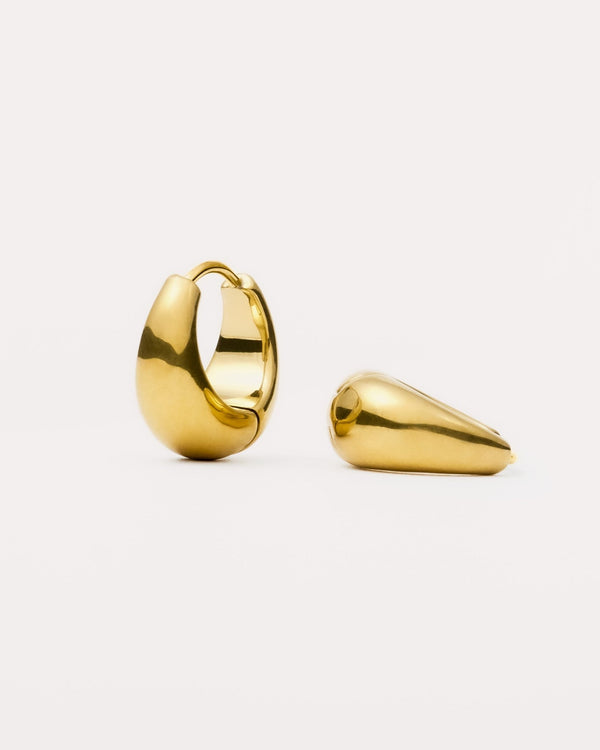
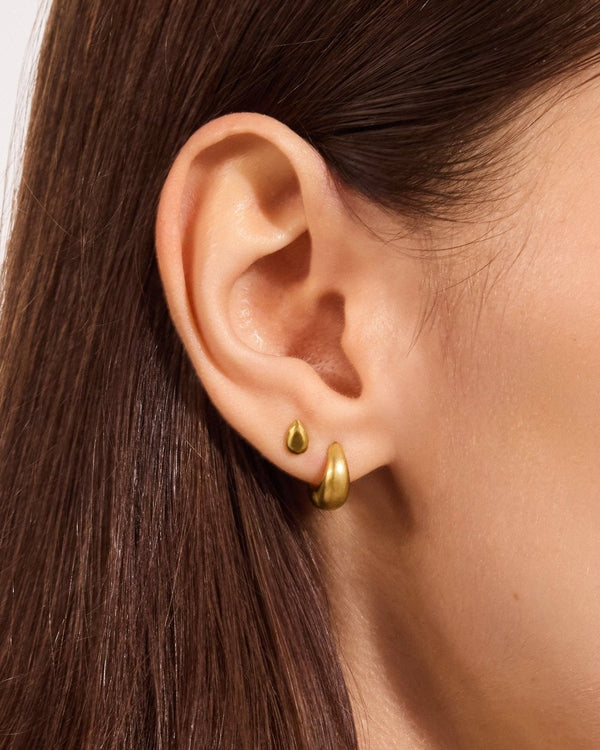
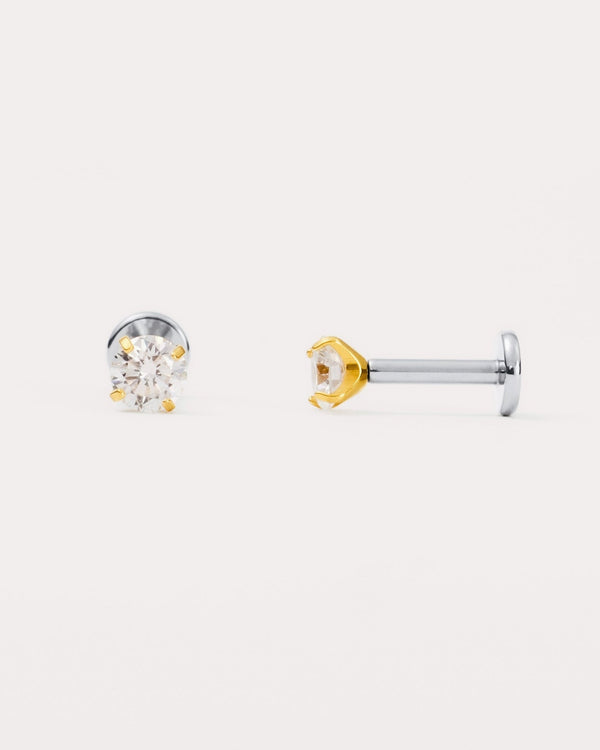
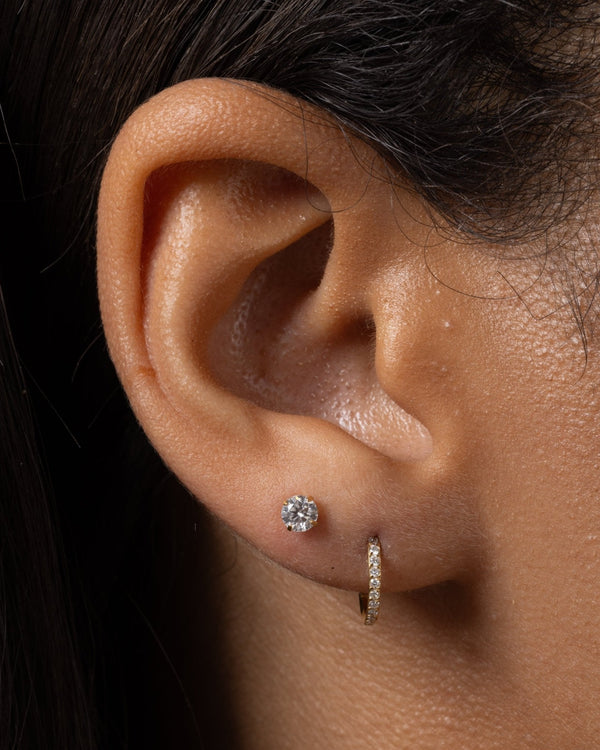
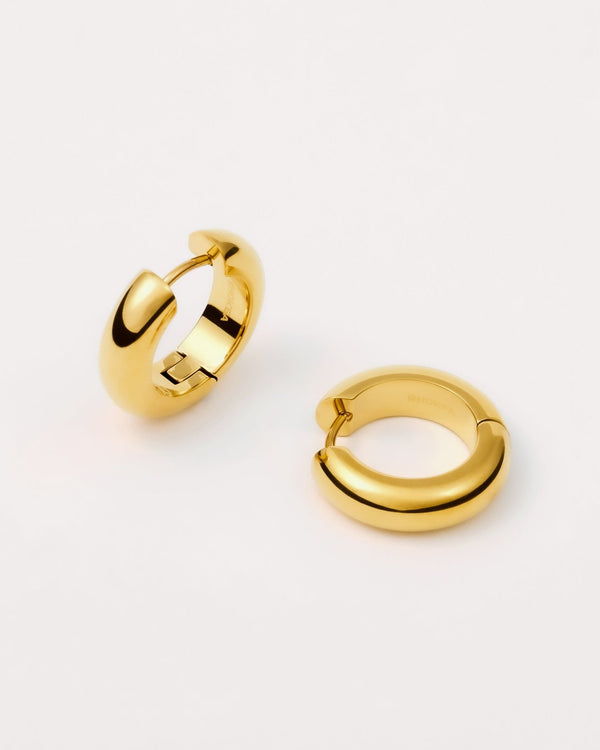
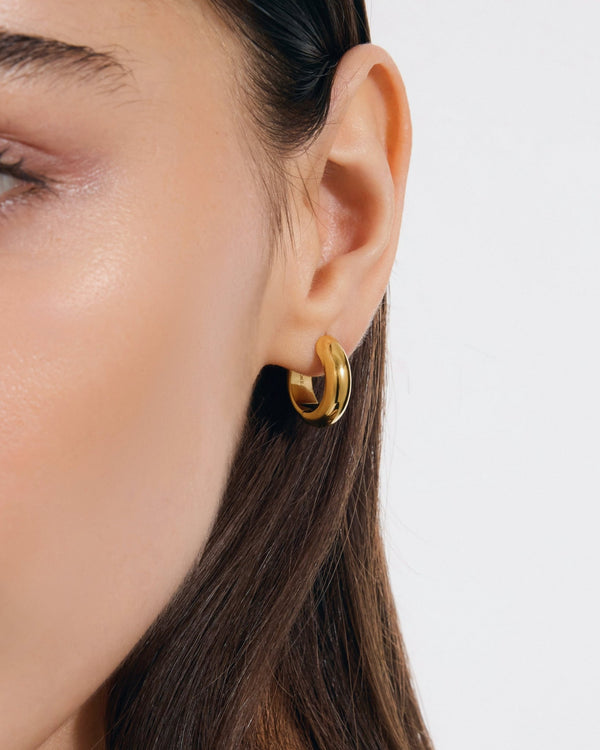
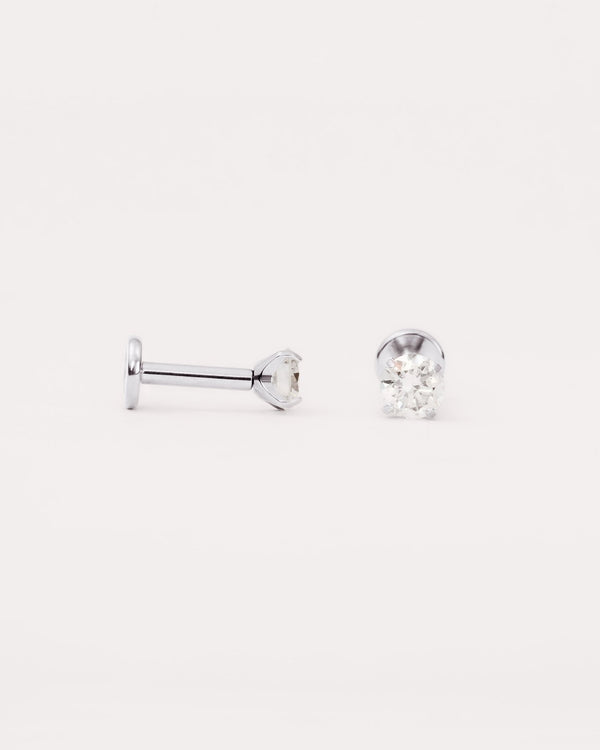
Today the word covers any earring designed for continuous wear: small hoops and hinged huggies, and increasingly flat back studs, which replace the butterfly clamp with a smooth disc that sits flush against the back of the lobe. What unites them is the brief, not the shape. An earring you never take out has no forgiving window: every gram of weight, every sharp edge and every metal decision is applied to your skin for 24 hours a day.
The 24/7 checklist
| Feature | Why it matters overnight | What to look for |
|---|---|---|
| Weight | Constant drag inflames the channel and stretches it over years | Featherweight pieces; titanium is roughly half the density of steel |
| Back design | Butterfly backs and sharp post tips concentrate pillow pressure into a point | A snug hoop with no back, or a flat disc back |
| Profile | Anything that protrudes snags hair, masks and bedding | Low-profile huggies, small hoops, flush stud tops |
| Closure | A loose clasp works itself open against the pillow | Hinged click closures or threadless push-fit posts |
| Metal | Sweat and shower water sit against the metal all day and night | Implant-grade titanium; avoid plated base metals6 |
Why the metal matters most
Wear an earring for an evening and a mediocre metal may get away with it. Wear it for a month of nights, showers and workouts and it will not. Sweat is mildly salty and corrosive, and plated fashion earrings respond to it predictably: the microns-thin plating wears through and the nickel-bearing base metal underneath reaches skin. Field studies of earrings bought in ordinary shops and markets in the US and Europe have repeatedly found pairs releasing nickel above the legal limit.45 With roughly 17.6% of women and 5.7% of men sensitised to nickel, that is the single most common way a sleeper ruins an ear.3
Implant-grade titanium avoids the problem at the level of chemistry rather than coating. ASTM F136 titanium, the alloy specified for surgical implants, forms a stable oxide layer that does not corrode in body fluids and contains no nickel to release.67 That is why it is the default material for initial piercing jewellery among professional piercers,8 and why it is the only metal we build with. If your ears itch or ache with your current earrings, our guide to nickel allergy symptoms explains how to confirm the cause.
How to choose your pair
Pick the format for the placement
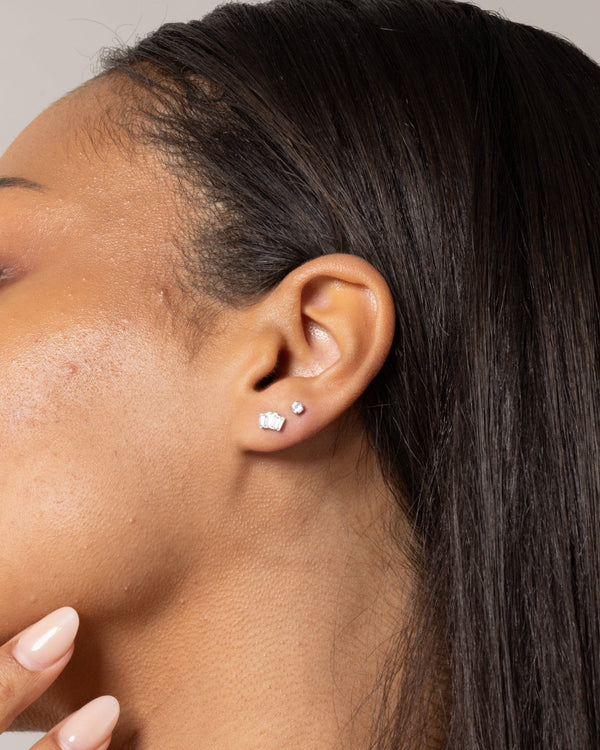
Lobes take small hoops, huggies or flat back studs equally well. Cartilage placements (helix, tragus, conch) favour flat back studs or snug cartilage hoops, because cartilage is less forgiving of pressure than the fleshy lobe.
Size the hoop to sit close
For sleeping, choose an inner diameter of 6 to 10 mm for lobes. A hoop that hugs the lobe moves less against the pillow than a larger one; if you are between sizes, size down for night wear.
Check the material claim
"Hypoallergenic" is not a regulated word. Look for a named standard: implant-grade or ASTM F136 titanium, backed by independent testing, is the claim that means something.6
Do a one-week comfort audit
After a week of continuous wear, your ears should feel like nothing is there. Any tenderness on waking points to weight or back design; any itch points to the metal. Both mean the pair is not a true sleeper.
When not to sleep in earrings
A healing piercing follows different rules. Fresh lobe piercings typically take around 6 weeks to settle and cartilage considerably longer, and during that window you follow your piercer's aftercare guidance rather than optimising for convenience.12 Signs that any ear needs a break from continuous wear are the same at any age of piercing: increasing soreness, heat, swelling, or discharge, which can signal infection and warrants medical advice rather than waiting out.1
The mechanics of overnight wear, including what pillow pressure does to different back types, are covered in detail in our overnight wear guide, and our guide to earring back types explains why the flat disc wins on pressure distribution.
What we recommend
The pairs that pass the 24/7 brief share a shape: lightweight implant-grade titanium, a snug hoop or flat back, and a click or push-fit closure with nothing to work loose. That describes most of our titanium sleeper earrings collection, from hinged huggies to solitaire flat back studs, all machined from the same ASTM F136 alloy used in surgical implants.
How rhokea handles this
Rhokea was founded by a doctor for reactive ears. Every sleeper is machined from ASTM F136 implant-grade titanium, weighs a fraction of a fashion earring, and closes with a hinge or push-fit post rather than a clamp. SkinPlating, our anodised finish, has no plating layer to wear through, so there is no nickel-bearing base metal waiting underneath.
Independent Intertek certification (December 2025) measured nickel release below 0.1 µg/cm²/wk, under half the UK and EU legal limit, with ASTM F136 composition confirmed.
Shop titanium sleeper earringsFrequently asked questions
What are sleeper earrings?
Sleeper earrings are small, lightweight earrings designed to be worn continuously, including overnight. The name comes from their original job of keeping a new piercing open around the clock. Modern sleepers are usually small hoops, huggies or flat back studs made from a skin-safe metal such as implant-grade titanium.
Are sleeper earrings safe to sleep in?
A well-designed sleeper is safe to sleep in on a fully healed piercing. The pair should be lightweight, snag-free and low-profile, with no butterfly back or sharp post tip to press into the skin, and made from a metal that does not release nickel. Newly pierced ears are different: follow your piercer's aftercare advice before sleeping in anything.
Are sleepers the same as huggies?
They overlap but are not identical. Huggie is a shape: a small hinged hoop that hugs the lobe. Sleeper describes a job: an earring comfortable and safe enough for continuous wear. A lightweight huggie in a skin-safe metal makes an excellent sleeper; a chunky huggie in plated base metal does not.
What is the best material for sleeper earrings?
Implant-grade titanium (ASTM F136) is the strongest choice for continuous wear. It releases no measurable nickel, does not corrode in sweat or shower water, and is roughly half the weight of steel or silver, which matters when the earring never comes out. Solid gold is also good; plated fashion metals are the worst choice because the plating wears through.
Do sleeper earrings keep a piercing open?
Yes, that is the original purpose. A piercing, particularly a young one, can begin to tighten within hours or days without jewellery. Wearing a comfortable sleeper keeps the channel open without needing to reinsert an earring every morning.
Can you shower and swim in sleeper earrings?
In implant-grade titanium, yes: it does not rust, tarnish or degrade in fresh water, chlorine or sea water. Plated sleepers are a different story, as water accelerates plating wear and exposes the base metal underneath. Whatever the metal, rinse and dry your ears after swimming.
What size sleeper earrings should I buy?
For lobes, most people find 6 mm to 10 mm inner-diameter hoops the comfortable range for sleeping, with 8 mm the usual sweet spot. Smaller sits closer and snags less; larger moves more against the pillow. For studs, choose a small low-profile top with a flat back rather than a butterfly.
Are hoops or studs better for sleeping in?
Both work if designed for it. A small, snug hoop has no back at all to press into the lobe, while a flat back stud spreads pressure across a smooth disc. What fails at night is the classic butterfly-back stud, which clamps the lobe between a sharp post tip and a coiled back.
Can children wear sleeper earrings?
Once a child's piercing is fully healed, small lightweight sleepers in a nickel-safe metal are a sensible everyday choice, because children rarely remove earrings at night. Avoid plated metals and anything with parts that can be picked off. For new piercings, follow the piercer's aftercare guidance exactly.
How long can you leave sleeper earrings in?
In implant-grade titanium, weeks at a time is fine on a healed piercing, provided you clean around the piercing regularly in the shower and dry it afterwards. Take any earring out promptly if you notice itch, soreness, swelling or discharge, and let the ear settle before rewearing.
References
- NHS. "Infected piercings." Accessed July 2026. NHS
- Meltzer DI. "Complications of body piercing." American Family Physician, 2005; 72(10):2029-2034. AAFP
- Schuttelaar MLA, Ofenloch RF, Bruze M, et al. "Prevalence of contact allergy to metals in the European general population with a focus on nickel and piercings: The EDEN Fragrance Study." Contact Dermatitis, 2018; 79(1):1-9. PubMed
- Thyssen JP, Maibach HI. "Nickel release from earrings purchased in the United States: the San Francisco earring study." Journal of the American Academy of Dermatology, 2008; 58(6):1000-1005. PubMed
- Thyssen JP, Menné T, Johansen JD. "Excessive nickel release from earrings purchased from independent shops and street markets: a field study from Warsaw and London." Journal of the European Academy of Dermatology and Venereology, 2011; 25(9):1021-1026. PubMed
- ASTM International. "ASTM F136-13(2021)e1: Standard Specification for Wrought Titanium-6Aluminum-4Vanadium ELI Alloy for Surgical Implant Applications." ASTM
- Sidambe AT. "Biocompatibility of Advanced Manufactured Titanium Implants: A Review." Materials, 2014; 7(12):8168-8188. PMC
- Association of Professional Piercers. "Jewelry for Initial Piercings." APP