Waterproof Jewellery: A Doctor's Guide to What Actually Survives Water

Materials
"Waterproof" is jewellery's most abused word. There is no standard behind it, no test a piece must pass, and no rule stopping a plated alloy from carrying the label. Yet the question it answers matters, because most of us want jewellery we never have to take off. Here is what water actually does to each metal, and which materials genuinely do not care.
Informational only: general medical information, not personal advice. A healing piercing should stay out of pools, sea and hot tubs regardless of what the jewellery is made of.6
What waterproof really means
Watches have IP ratings and dive certifications. Jewellery has adjectives. When a brand calls a piece waterproof, water-resistant or "shower-proof", no regulator has defined those words and no test has been passed, so the claim is only as good as the metallurgy behind it.
It helps to separate the three ways water actually damages jewellery. Corrosion is the metal itself reacting and degrading, the fate of cheap alloys. Tarnish is a surface film, the darkening sterling silver owners know, which is cosmetic but persistent. Plating loss is the quiet one: water, soap and friction thin the decorative layer until the different metal underneath shows through. A piece is only waterproof if it is immune to all three, which is a property of solid, inert materials, never of coatings.
What each kind of water does
| Exposure | What it does | Riskiest metals |
|---|---|---|
| Daily shower | Warm water and surfactants thin plating; soap film dulls stones | Plated and vermeil pieces |
| Swimming pool | Chlorine accelerates tarnish and attacks lower-karat gold alloys | Silver, plated, 9k gold |
| Sea | Salt water is corrosive to most alloys and abrasive with sand | Fashion alloys, plated |
| Hot tub | Heat plus chlorine or bromine and long soaks: the harshest combination | Everything except titanium and solid gold |
| Sweat and gym | Salty, mildly acidic, constant: the slow test most jewellery fails | Plated and nickel-bearing alloys3 |
Materials ranked for water
| Material | In water | Verdict |
|---|---|---|
| Implant-grade titanium | Stable oxide layer; no rust, tarnish or corrosion in fresh, chlorinated or salt water2 | Genuinely waterproof |
| Solid gold (14k+) | Inert at higher karats; lower karats can react with chlorine | Waterproof, at a price |
| Sterling silver | Survives water but tarnishes, faster with chlorine and sulphur | Water-tolerant, not waterproof |
| Stainless steel | Generally water-stable, but many grades contain nickel | Waterproof-ish; check the skin side |
| Gold-plated / vermeil | Plating thins with every shower until base metal shows | Not waterproof |
| Fashion alloys | Corrode, discolour and can release nickel when wet34 | Keep dry, or better, avoid |
Titanium's position at the top is not a jewellery marketing claim. The implant-grade alloys are specified for surgical devices precisely because they remain stable in body fluid for decades,12 and the same corrosion resistance is why the metal is used in marine engineering. Our deeper dives cover the neighbouring questions: showering with titanium earrings, what makes earrings water-safe and jewellery that doesn't tarnish.
The plating problem
For earrings specifically, waterproof failure has a medical consequence, not just a cosmetic one. Plating on fashion earrings is microns thick, and every shower, swim and workout thins it. Once it wears through, the base metal reaches skin, and field studies of earrings bought in ordinary shops and markets, including in London, have repeatedly found pairs releasing nickel above the legal EN 1811 limit of 0.2 µg/cm²/week.45
That matters because nickel allergy is common, affecting roughly 17.6% of women and 5.7% of men in Europe, and an itchy, flaky reaction that appears where jewellery touches skin is its classic signature.37 A "waterproof" label on a plated piece has it backwards: the wetter the life the piece leads, the faster it stops being safe. If this pattern sounds familiar, our nickel allergy symptoms guide explains how to confirm it.
Sensible water rules
Heal first, swim later
A healing piercing is an open wound, and pools, sea and hot tubs expose it to bacteria. The NHS advises keeping new piercings out of the water until healed; waterproof jewellery protects the jewellery, not the wound.6
Rinse after chlorine and salt
Even inert metals carry pool chemicals and salt residue onto skin. A fresh-water rinse and a pat dry after swimming is a ten-second habit that also keeps stones bright.
Audit anything plated
Look at high-wear points: post, clasp, inner hoop. Dullness, colour change or a coppery tone showing through means the plating has opened and, on earrings, the piece has earned retirement.
Match the metal to the life
If a piece never comes off, through showers, gym and sleep, choose a metal that is waterproof by chemistry: implant-grade titanium or solid gold. Save delicate and plated pieces for dry occasions.
What we recommend
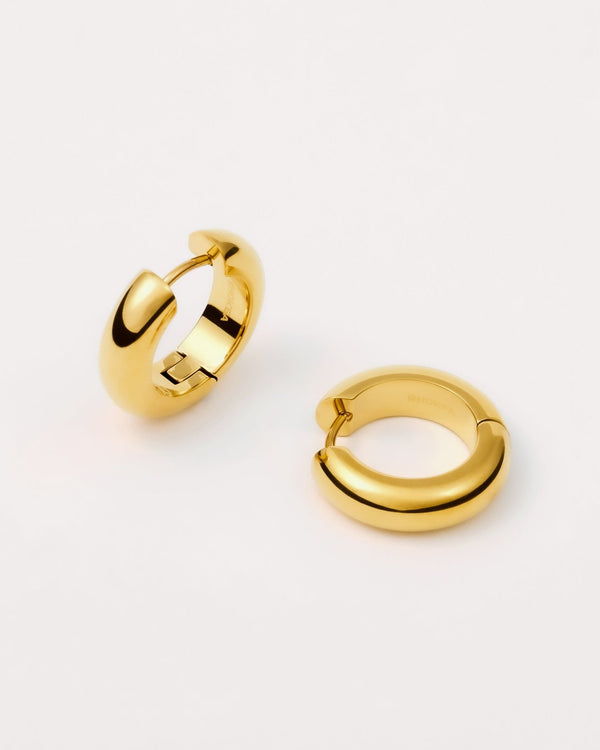
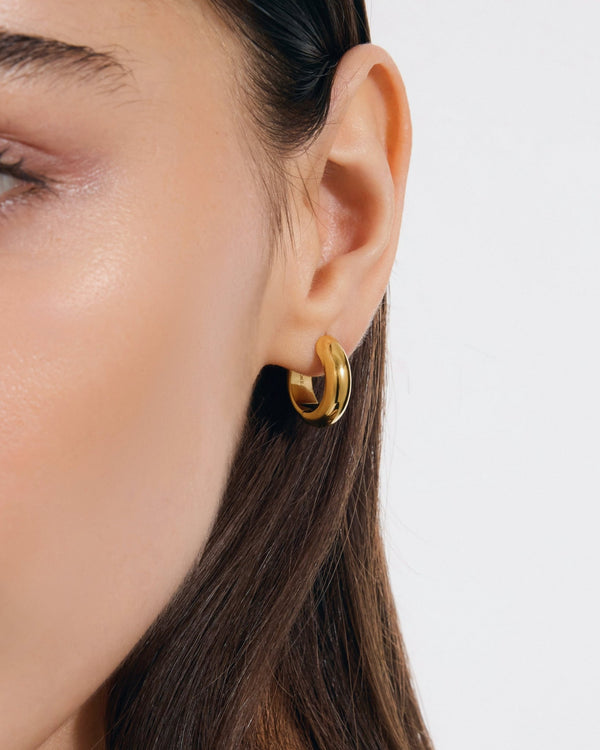
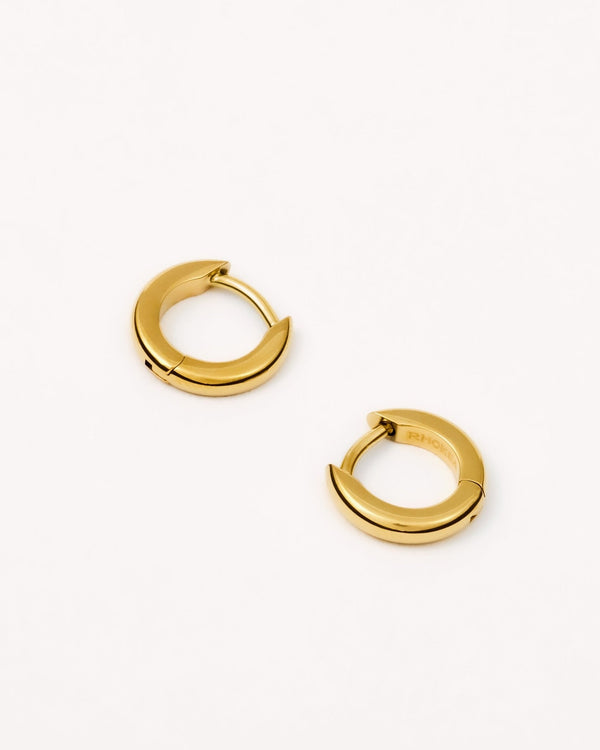
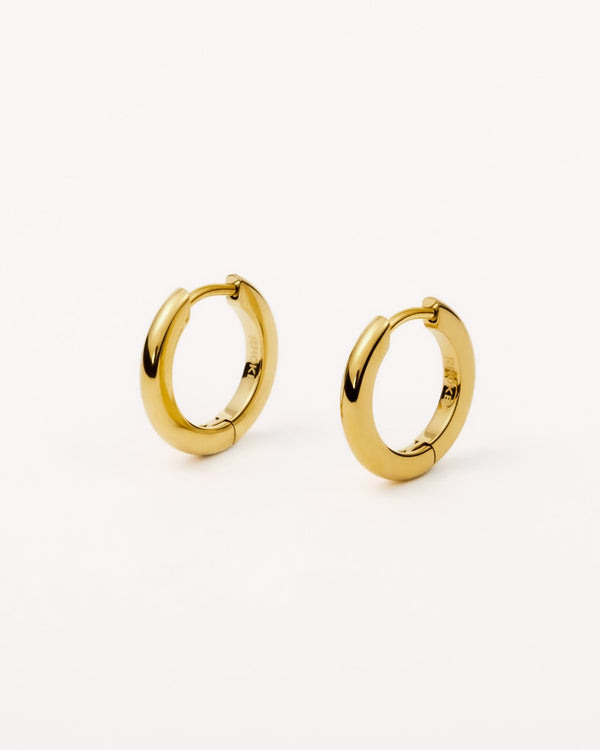
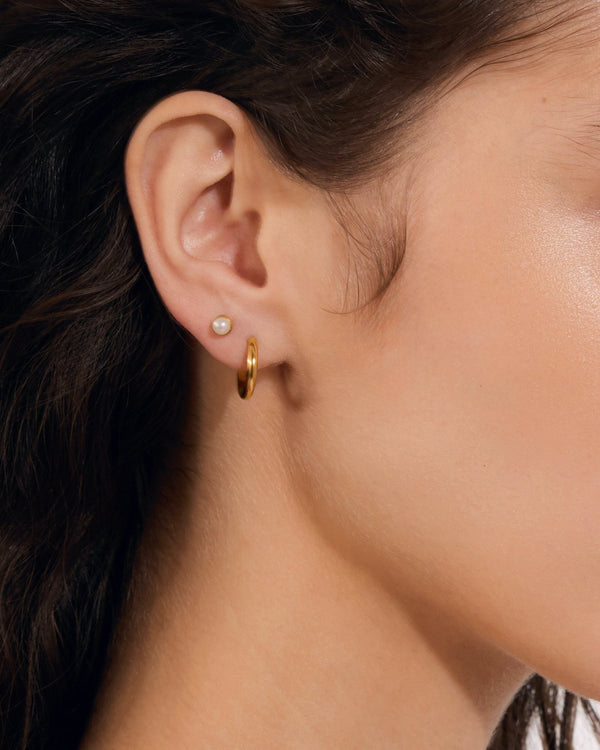
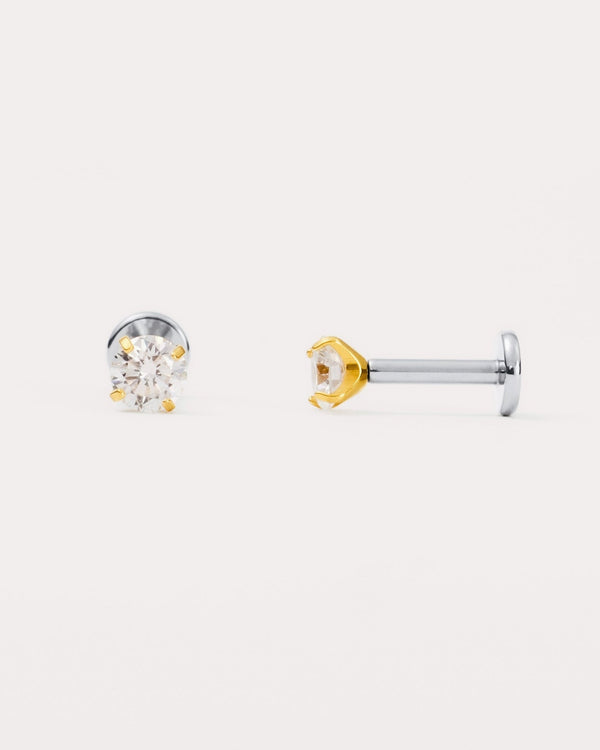
For 24/7 wet-life wear, the brief is solid, inert and nickel-free, which is the design basis of our implant-grade titanium jewellery collection: hoops, huggies and flat back studs you can shower, train and swim in without a second thought.
How rhokea handles this
Rhokea was founded by a doctor for reactive skin. Every piece is machined from ASTM F136 implant-grade titanium, so its water resistance comes from the metal itself, not a coating. SkinPlating, our anodised colour finish, changes the oxide layer rather than adding a plating layer, so there is nothing to wear through in the shower and no nickel-bearing base metal waiting underneath.
Independent Intertek certification (December 2025) measured nickel release below 0.1 µg/cm²/wk, under half the UK and EU legal limit, with ASTM F136 composition confirmed.
Shop waterproof titanium jewelleryFrequently asked questions
What does waterproof jewellery actually mean?
There is no regulated definition, so the label means whatever the seller wants it to mean. In practice a piece is genuinely waterproof only if water changes nothing about it: no tarnish, no corrosion, no plating loss and no skin-reactive metals exposed over time. Solid inert metals such as implant-grade titanium qualify; plated fashion metals do not, whatever the label says.
Can you shower with jewellery on?
With implant-grade titanium or solid gold, daily showering is fine; soap film is the worst outcome and rinses off. Sterling silver tolerates water but tarnishes faster with sulphur-containing products. Plated jewellery is the one to take off, because warm water and surfactants accelerate the wear that eventually exposes the base metal.
Does chlorine damage jewellery?
Chlorinated water attacks many metals: it accelerates tarnish on silver, can pit and discolour lower-karat gold alloys, and speeds the breakdown of plated pieces. Implant-grade titanium is unaffected by pool chlorine at swimming concentrations. Whatever you wear, a fresh-water rinse afterwards is a good habit.
Can you swim in the sea with jewellery?
Salt water is more corrosive than pool water for most alloys, and it is also simply a good way to lose earrings. Titanium is chemically indifferent to sea water, which is why it is used in marine engineering. If you swim in anything else regularly, rinse and dry the piece afterwards, and expect plated jewellery to age quickly.
Is titanium jewellery waterproof?
Yes, in the fullest sense. Implant-grade titanium forms a stable oxide layer that does not rust, tarnish or corrode in fresh water, chlorine or sea water, and there is no plating to wear off and no nickel to release. It is the same alloy family used for surgical implants that live in body fluid for decades.
Is gold-plated or vermeil jewellery waterproof?
No. Plating is a decorative layer measured in microns over a different metal, and water, soap, sweat and friction all thin it. Once it wears through, the base metal shows and, in fashion alloys, can release nickel into skin. Vermeil (gold over sterling silver) lasts longer than flash plating but follows the same curve.
Why does my jewellery turn my skin green?
The green mark is usually copper oxidising: copper-rich alloys and worn plated pieces react with sweat and water, and the compounds transfer to skin. It is staining rather than an allergy, but it is also a sign the metal surface is reacting, and on earrings that same surface can be releasing nickel.
Can you wear jewellery in a hot tub?
Hot tubs combine heat, chlorine or bromine and long soak times, which is the harshest common environment for jewellery. Plated and silver pieces suffer most; titanium and solid gold cope. If a piece matters to you and is not solid and inert, leave it out of the tub.
Can you swim with a new piercing?
Swimming is best avoided while a piercing heals: pools, sea and especially hot tubs expose the open channel to bacteria and irritation. The NHS advises keeping new piercings out of the water until healed. Waterproof jewellery protects the jewellery, not the wound.
What is the best waterproof jewellery for sensitive skin?
Implant-grade titanium is the combination answer: waterproof by chemistry rather than coating, and nickel-free by composition, so continuous wet wear cannot expose anything reactive. Solid gold in higher karats is the alternative at a higher price and weight. Avoid anything plated for 24/7 wear.
References
- ASTM International. "ASTM F136-13(2021)e1: Standard Specification for Wrought Titanium-6Aluminum-4Vanadium ELI Alloy for Surgical Implant Applications." ASTM
- Sidambe AT. "Biocompatibility of Advanced Manufactured Titanium Implants: A Review." Materials, 2014; 7(12):8168-8188. PMC
- Ahlström MG, Thyssen JP, Wennervaldt M, Menné T, Johansen JD. "Nickel allergy and allergic contact dermatitis: A clinical review of immunology, epidemiology, exposure, and treatment." Contact Dermatitis, 2019; 81(4):227-241. PubMed
- Thyssen JP, Menné T, Johansen JD. "Excessive nickel release from earrings purchased from independent shops and street markets: a field study from Warsaw and London." Journal of the European Academy of Dermatology and Venereology, 2011; 25(9):1021-1026. PubMed
- CEN. "EN 1811: Reference test method for release of nickel from all post assemblies which are inserted into pierced parts of the human body and articles intended to come into direct and prolonged contact with the skin." CEN
- NHS. "Infected piercings." Accessed July 2026. NHS
- Schuttelaar MLA, Ofenloch RF, Bruze M, et al. "Prevalence of contact allergy to metals in the European general population with a focus on nickel and piercings: The EDEN Fragrance Study." Contact Dermatitis, 2018; 79(1):1-9. PubMed