Does Stainless Steel Jewellery Tarnish? What Sweat, Pools and Seawater Actually Do to Steel

Materials
Stainless steel is sold as the metal that shrugs everything off: tarnish free, sweat proof, waterproof. That is half true. Steel does not darken the way silver does, but "stainless" is not a promise, it is a thin protective film with one well-documented enemy. That enemy is chloride, and chloride is exactly what sweat, swimming pools and the sea are made of. Here is what the corrosion literature actually says, and how titanium compares.
Informational only: general information, not personal medical advice. If earrings leave your skin itchy, flaky or weeping, our nickel allergy symptoms guide explains the signs and what to do.
What tarnish actually is
Tarnish is a chemical film. Sterling silver darkens because sulphur compounds in air and skin products build silver sulphide on the surface, a cosmetic layer you can polish off. Stainless steel resists that reaction, which is why "tarnish free" stainless marketing is technically true. It is also why it misses the point.
Steel's documented failure mode is different: pitting and crevice corrosion. Surface analysis shows chloride ions penetrate the outer layer of 316L's passive film and block the chromium enrichment that normally strengthens it, leaving the surface in a measurably weaker, less protective state.1 The damage starts microscopic: dull patches, rough spots, tiny pits, not the even darkening silver owners know. Our guides to jewellery that doesn't tarnish and sterling silver cover the neighbouring metals.
Sweat: the daily chloride test
Sweat is a warm, mildly acidic chloride solution, close enough to a corrosion test medium that the law treats it as one: EN 1811, the UK and EU reference test for nickel release from jewellery, is run in artificial sweat, and earring posts must release less than 0.2 µg/cm² of nickel per week to be legal.10
Here is the honest part. Well-made, properly finished solid 316L passes that test easily: in the key clinical study, low-sulphur 304 and 316L released under 0.03 µg/cm²/week and provoked no reactions in nickel-allergic volunteers.7 The trouble is the gap between that laboratory steel and what is actually sold. A study of 96 jewellery items bought at market found 79 released nickel, some far above the legal limit,8 and laboratory work on electroplated 316L shows why: plating microporosity and a damaged passive layer turn a compliant metal into a leaking one.9 Sweat does not attack good steel much. It finds out whether your steel was good.
Pools, hot tubs and the sea
Swimming water raises the chloride stakes. The WHO guideline for public pools is 1 mg/l of free chlorine, up to 3 mg/l, with hot tubs dosed higher and routine shock treatment taking water to around 10 mg/l.4 Seawater is in a different league again, at roughly 19 g of chloride per kilogram.5
The corrosion field takes this seriously. UK structural guidance documents pool environments as among the most aggressive for the common 304 and 316 stainless grades, with pitting, crevice corrosion and stress corrosion cracking all recorded,2 and a 2025 safety report repeats the warning that stainless steel is "not a universal solution" in chloride-rich pool atmospheres.3 That evidence comes from structural steelwork, not earrings, so the fair reading is about chemistry, not catastrophe: chloride genuinely degrades steel's protection, on a timescale that depends on exposure. Chloride is even documented cracking gold jewellery alloys, including 18k.6 One swim changes nothing visible. A swimming habit is a stress test, which is why our waterproof jewellery guide ranks solid inert metals above everything else.
Steel vs titanium, side by side
| Property | 316L stainless steel | Implant-grade titanium |
|---|---|---|
| Protective film | Chromium oxide; weakened by chloride1 | Titanium dioxide; stable in chloride, self-repairing11 |
| In lab comparison | Lower corrosion resistance in body-fluid solution12 | Higher potential, lower corrosion current12 |
| Nickel content | 10 to 14% by composition14 | None |
| Weight | 8.0 g/cm³14 | 4.43 g/cm³, about 45% lighter14 |
| Governing standard | "Surgical steel" is unregulated as a jewellery label | ASTM F136, the surgical implant specification13 |
| Verdict for 24/7 wear | Fine when solid and dry-life; chloride-sensitive | Built for wet, salty, permanent wear |
None of this makes steel a bad metal; it makes it a metal with conditions. Titanium's oxide film is the reason the alloy is standard in marine engineering and in implants that sit in body fluid for decades, and in direct electrochemical comparison it outperforms 316L in simulated body fluid.1112 For the sensitive-ears version of this comparison, see titanium vs surgical steel earrings.
The nickel question, honestly
You will read elsewhere that sweat makes stainless steel leach nickel into your skin. The evidence does not support that as a blanket claim, and we will not make it. Solid, properly passivated 316L releases very little nickel and did not trigger reactions in sensitised patients under test conditions.7
The defensible claim is narrower and more useful. The nickel is genuinely in there, at 10 to 14 percent of the alloy,14 held back by a film thinner than a wavelength of light. Scratch that film, buy a piece that was resulfurised, plated or never a marked grade at all, and release climbs; that is exactly the pattern market studies keep finding in cheap earrings.89 With around one in seven adults in the European general population sensitised to nickel,15 steel jewellery is a bet that the surface stays perfect. Titanium is the option with nothing to release.
If you wear steel anyway
Rinse after chlorine and salt
Chloride does its slow work while residue sits on the metal. A fresh-water rinse and a pat dry after the pool or the sea removes most of the exposure, for steel and for every other metal you wear.
Keep it out of hot tubs
Heat accelerates chloride chemistry, and hot tubs combine the highest disinfectant doses with the longest soak times.4 This is the single harshest common environment for steel jewellery.
Inspect the wear points
Posts, clasp joints and the inside of hoops are where films fail first. Dull patches, rough spots or any colour change on a "stainless" piece mean the surface is no longer intact, and an earring with a compromised surface has earned retirement.
Demand a grade, not a vibe
"Stainless steel" and "surgical steel" are unregulated words on a listing. If the seller cannot name 316L or an implant designation, assume the cheapest alloy that polishes up, and keep it away from pierced skin.
What we recommend
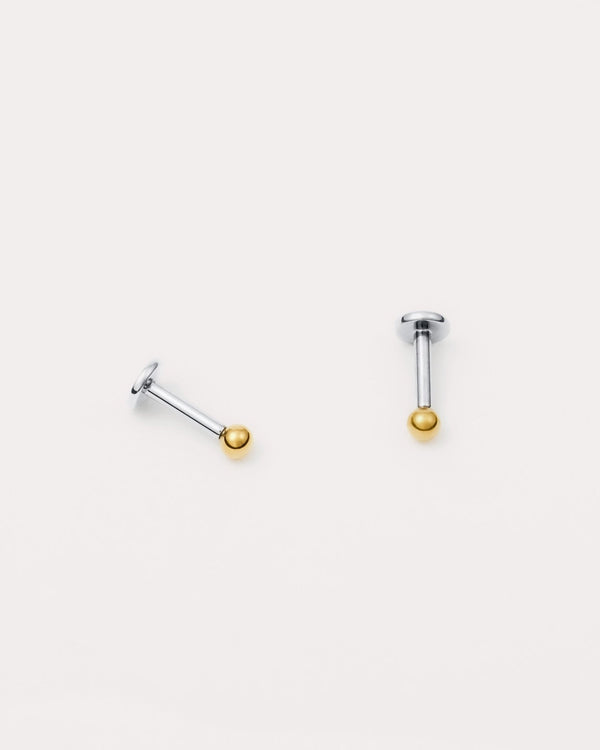
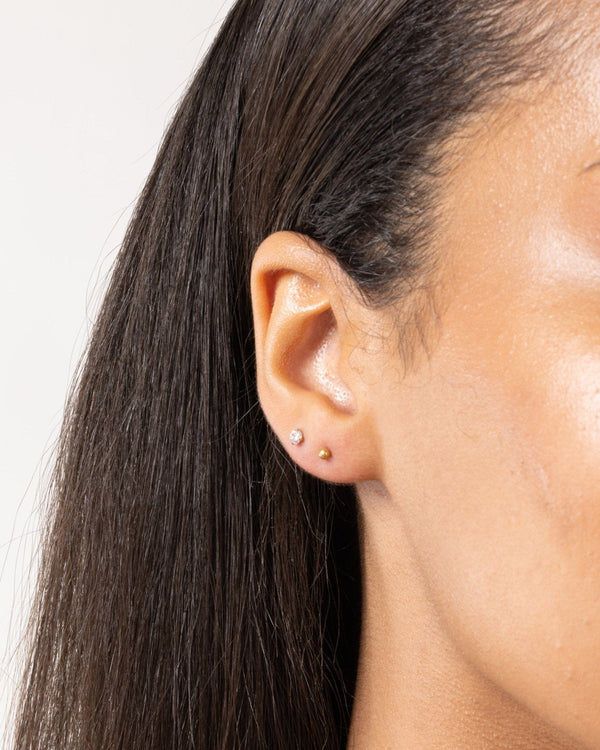
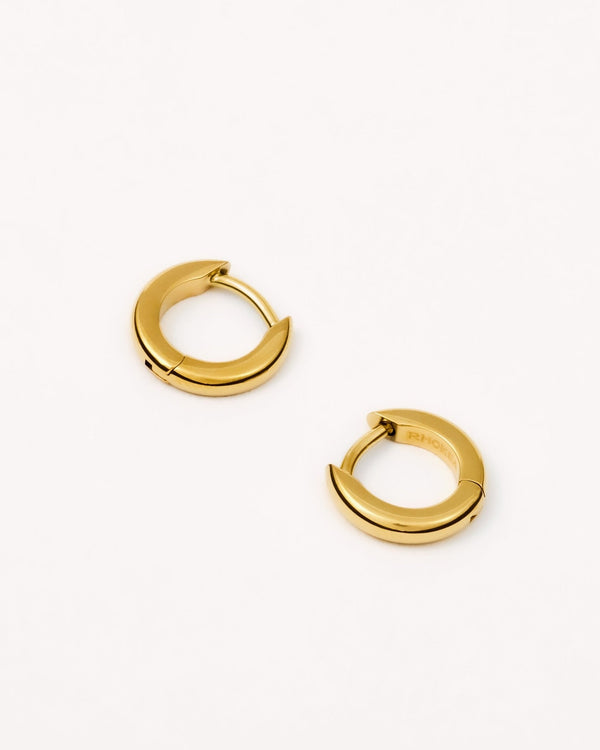
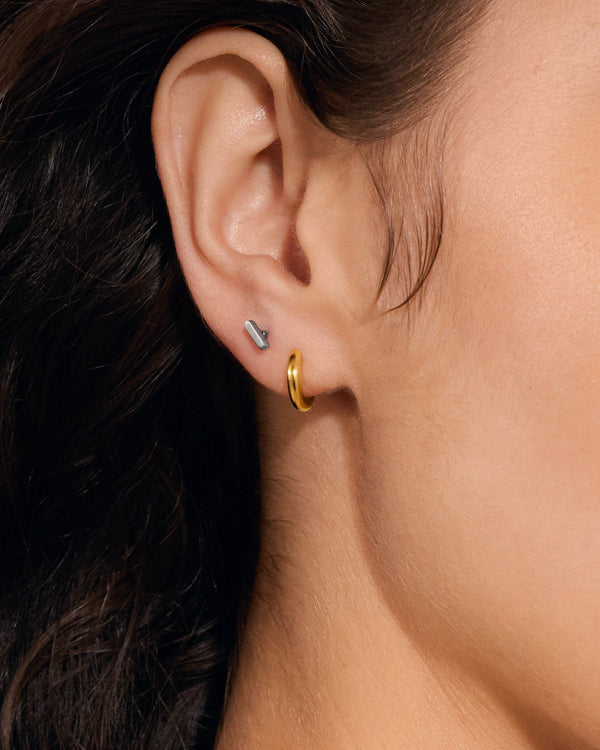
If jewellery never comes off, through training, showers, pools and sleep, choose the metal whose protection does not degrade in chloride and has no nickel behind it. That is the design basis of our implant-grade titanium jewellery collection: hoops, huggies and flat back studs made for permanent wear.
How rhokea handles this
Rhokea was founded by a doctor for reactive skin. Every piece is machined from ASTM F136 implant-grade titanium, so there is no chromium film to defend and no nickel underneath it. SkinPlating, our anodised colour finish, is part of titanium's own oxide layer rather than a coating, so there is nothing to wear through in sweat or water.
Independent Intertek certification (December 2025) measured nickel release below 0.1 µg/cm²/wk, under half the UK and EU legal limit, with ASTM F136 composition confirmed.
Shop titanium jewelleryFrequently asked questions
Does stainless steel jewellery tarnish?
Not the way silver does. Silver darkens because sulphur in the air builds a film on the surface; stainless steel resists that and holds its colour in normal wear. Steel's actual weakness is chloride: the salt in sweat, pools and the sea can attack the invisible chromium-oxide film that makes steel stainless, which shows up as dull patches, tiny pits or rough spots rather than classic dark tarnish.
Can you shower with stainless steel jewellery?
Solid, good-grade stainless steel copes with showers; fresh water and soap are the gentlest thing it will meet all day. The pieces that fail in the shower are plated or made from unnamed alloys, because warm water and surfactants speed up the wear that exposes the base metal. If a piece is only described as stainless steel with no grade, treat it cautiously.
Does chlorine damage stainless steel jewellery?
It can over time. Chloride is the one chemical family stainless steel is known to be vulnerable to: it causes pitting and crevice corrosion, and swimming pool environments are documented in the corrosion literature as among the most aggressive for the common 304 and 316 grades. One swim will not visibly change a steel earring, but a swimming habit is a genuine stress test.
Does sweat damage stainless steel jewellery?
Sweat is a warm, mildly acidic chloride solution, which is why the legal nickel-release test for jewellery is run in artificial sweat. Well-made solid 316L tolerates it and releases very little nickel. The problems start when the surface is scratched, poorly finished or plated, because a damaged surface releases more of what is underneath.
Is stainless steel jewellery waterproof?
Mostly, with an asterisk. Solid 316L handles fresh water well and usually looks unchanged for a long time. But its protective film is chloride-sensitive, so pools, hot tubs and the sea slowly work against it, and steel jewellery sold without a named grade may behave far worse. Titanium is waterproof without the asterisk.
Why has my stainless steel jewellery discoloured?
Usually one of three things: it was plated and the coating has thinned; it was not really a marked grade of stainless steel; or chloride exposure has dulled and pitted the surface. Genuine solid 316L does not darken like silver, so visible colour change is a sign the piece is not what the label implied, and on earrings that is a reason to retire it.
Does stainless steel jewellery contain nickel?
Yes. The 316L grade used for good steel jewellery is roughly 10 to 14 percent nickel by composition. In a properly finished solid piece that nickel stays locked in and measured release is very low. But the nickel is always there, one damaged surface away, which is why steel is a gamble for sensitised skin in a way titanium is not, since implant-grade titanium contains no nickel at all.
Does titanium tarnish?
No. Titanium instantly forms a thin, stable oxide layer that does not darken with air, sweat or water, and if scratched it re-forms on its own. That layer is also stable in chloride, which is why titanium is used in marine engineering and surgical implants. Anodised colours on titanium are part of the same oxide layer, not a plating that can wear through.
Is titanium better than stainless steel for jewellery?
For jewellery that lives on you, yes. In direct laboratory comparison titanium alloy resists corrosion better than 316L in body-fluid-like solutions, its oxide film is stable in the chloride environments that attack steel, it contains no nickel, and it is roughly 45 percent lighter for the same design. Steel remains a reasonable budget metal for dry, occasional wear.
What grade of stainless steel is used in jewellery?
Good steel jewellery uses 316L, sometimes called surgical steel, and body jewellery may use the implant designation ASTM F138. A great deal of fashion jewellery sold as stainless steel names no grade at all, and market studies of cheap earrings have repeatedly found items releasing nickel above the legal limit. If the grade is not stated, assume the cheapest alloy that polishes up.
References
- Wang Z, Seyeux A, Zanna S, Maurice V, Marcus P. "Chloride-induced alterations of the passive film on 316L stainless steel and blocking effect of pre-passivation." Electrochimica Acta, 2020; 329:135159. DOI
- British Stainless Steel Association. "SCC (Stress Corrosion Cracking)", incorporating HSE guidance SIM 5/2002/18 on stainless steel in swimming pool buildings. BSSA
- CROSS-UK. "Steelwork corrosion in a swimming pool." Safety Report 1427, November 2025. CROSS
- World Health Organization. Guidelines for Safe Recreational Water Environments. Volume 2: Swimming Pools and Similar Environments. WHO, 2006. WHO
- Millero FJ, Feistel R, Wright DG, McDougall TJ. "The composition of Standard Seawater and the definition of the Reference-Composition Salinity Scale." Deep-Sea Research Part I, 2008; 55(1):50-72. DOI
- Merriman CC, Bahr DF, Norton MG. "Environmentally induced failure of gold jewelry alloys." Gold Bulletin, 2005; 38:113-119. DOI
- Haudrechy P, Foussereau J, Mantout B, Baroux B. "Nickel release from stainless steels." Contact Dermatitis, 1997; 37(3):113-117. PubMed
- Hamann D, Hamann CR, Kishi P, Menné T, Johansen JD, Thyssen JP. "Jewellery: alloy composition and release of nickel, cobalt and lead assessed with the EU synthetic sweat method." Contact Dermatitis, 2015; 73(4):231-238. PubMed
- Emanuele R, et al. "Nickel release from 316L stainless steel following a Ni-free electroplating cycle." Heliyon, 2024; 10(17):e37125. PMC
- UK REACH. "Annex XVII, Entry 27: Nickel restriction for articles in prolonged skin contact and post assemblies inserted into pierced ears." legislation.gov.uk
- Bocchetta P, Chen LY, Tardelli JDC, dos Reis AC, Almeraya-Calderón F, Leo P. "Passive layers and corrosion resistance of biomedical Ti-6Al-4V and beta-Ti alloys." Coatings, 2021; 11(5):487. DOI
- Aroussi D, Aour B, Bouaziz AS. "A comparative study of 316L stainless steel and a titanium alloy in an aggressive biological medium." Engineering, Technology & Applied Science Research, 2019; 9(6):5093-5098. DOI
- ASTM International. "ASTM F136-13(2021)e1: Standard Specification for Wrought Titanium-6Aluminum-4Vanadium ELI Alloy for Surgical Implant Applications." ASTM
- Materials datasheets: ASM/MatWeb, "Titanium Ti-6Al-4V (Grade 5), Annealed" (density 4.43 g/cm³); AZoM, "Stainless Steel, Grade 316L, UNS S31603" (density 8.0 g/cm³, nickel 10 to 14%). MatWeb / AZoM
- Schuttelaar MLA, Ofenloch RF, Bruze M, et al. "Prevalence of contact allergy to metals in the European general population with a focus on nickel and piercings: The EDEN Fragrance Study." Contact Dermatitis, 2018; 79(1):1-9. PMC